

Most people expect grief to soften with time after a death or major loss. For some, yearning, numbness, and avoidance stay intense for months or years and begin to crowd out work, relationships, and daily meaning. Clinicians may describe that pattern as prolonged grief disorder (also called complicated grief in everyday language)—an educational label here, not a self-diagnosis. This guide is a how-to: what stuck grief can look like, how the dual-process model frames mourning and rebuilding, what structured counseling often involves at a high level, and soft pathways for adults, children, and military families navigating life transitions.
Related reading: behavioral health resources and care across life stages in Maryland, military-to-civilian transition stress and identity, outpatient therapy, telehealth counseling, adult psychotherapy, and perinatal mental health when reproductive loss is part of the picture. Related reading on trauma-focused options: CPT vs PE vs EMDR for PTSD.
If you are in crisis or at immediate risk of harm, call 911, go to the nearest ER, or call or text 988. Blue Sails is not an emergency service. Veterans can press 1 after calling 988 for the Veterans Crisis Line.
Key Takeaways
- Prolonged grief disorder (DSM-5-TR) involves persistent yearning or preoccupation with the deceased that causes significant distress or impairment; adult criteria generally require at least twelve months after the death (six months for children and adolescents)—only a clinician diagnoses.
- Healthy coping is often described as oscillating between loss-oriented mourning and restoration-oriented tasks (new roles, routines, practical demands), not a fixed stage sequence.
- Stage language such as Kübler-Ross can be useful vocabulary; skipped, overlapping, or atypical reactions are common variation, not failure.
- Structured counseling may include grief-focused psychotherapy, continuing-bonds work, behavioral activation for routines, and—when depression, anxiety, or PTSD co-occur—coordinated care. Outcomes vary; nothing here promises a cure.
- Daily disbelief, numbness, avoidance, or meaninglessness that disrupts work and relationships is a reasonable reason to talk with a licensed Provider; crisis symptoms need 911, the nearest ER, or 988 immediately.
What Complicated or Prolonged Grief Is (Educational, Not Diagnosing)
After someone dies, many people notice waves of sorrow that surge around reminders and then ease enough to work, eat, and occasionally laugh again. When yearning or preoccupation with the person who died stays intense most days, and numbness, disbelief, avoidance of reminders, or a sense that life has lost meaning persist well past culturally expected timelines, clinicians may evaluate for prolonged grief disorder under DSM-5-TR trauma- and stressor-related framing.
Prevalence estimates vary by study and population; a portion of bereaved adults experience impairing grief symptoms that outlast typical mourning, but exact percentages should be confirmed with current clinical sources and a Provider—not inferred from a website. Intensity and functional impact matter more than the calendar alone. This article does not diagnose; only a clinical assessment can determine whether criteria are met or whether symptoms reflect depression, PTSD, other conditions, or overlapping presentations.
Reproductive loss—miscarriage, stillbirth, infertility—and non-death transitions (divorce, job loss, medical separation, identity change) can also bring profound grief. For loss during pregnancy, see grief after miscarriage, stillbirth and IVF loss and perinatal mental health and PMADs.

Dual-Process Coping and Stage Language
Two frameworks often shape how clinicians talk about grief. The Dual Process Model (Stroebe and Schut) describes coping as a back-and-forth between loss-oriented stressors (facing the death, reminiscing, feeling the absence) and restoration-oriented stressors (new roles, finances, changed routines). Temporary respite from either side can help the nervous system avoid overload; getting stuck only in mourning or only in “keeping busy” can make adjustment harder. Oscillating is not avoidance or failure—it is one way people sustain the work of grieving while rebuilding daily life.
Stage-based language (denial, anger, bargaining, depression, acceptance) remains culturally familiar. Kübler-Ross developed her stages from interviews with dying patients, not primarily from mourners, and research has not confirmed a fixed sequence for everyone. Attachment-informed descriptions (numbing, yearning and searching, disorganization, reorganization) offer another vocabulary. Reactions can overlap, skip “stages,” or defy lists entirely. When grief feels disordered compared with popular models, that is often normal variation—not evidence that someone is grieving “wrong.”
When Grief May Need Structured Support
Consider talking with a licensed clinician when sorrow stalls instead of softening; when yearning, numbness, or avoidance dominate most days; when work, school, parenting, or close relationships are meaningfully impaired; or when hopelessness, self-harm thoughts, or inability to care for basic needs appear. Screening tools such as the PG-13-R are sometimes used in clinical settings to organize questions about yearning, identity disruption, and functioning—a high score warrants review with a clinician, not self-labeling.
DSM-5-TR timing thresholds (about twelve months for adults; about six for children and adolescents) and ICD-11 framing (grief lasting more than six months and exceeding cultural expectations) are minimums that help clinicians distinguish persistent grief from still-healing grief—not deadlines for “getting over it.” People do not have to wait a full year to seek support; waiting periods apply to formal diagnosis, not to getting help.
Grief, depression, and PTSD can share sadness, sleep disruption, withdrawal, and impaired functioning. Yearning that centers on the person who died is often highlighted in prolonged grief discussions; depression tends to spread low mood or lost pleasure across many areas; PTSD keeps the nervous system locked in fear responses tied to a traumatic event. These can co-occur. Self-sorting by checklist is unreliable; a Provider maps timeline, context, culture, and function.

What Structured Grief Counseling Often Involves
Structured grief counseling typically starts with listening—mapping the loss, life context, supports, and safety—then connecting triggers to thoughts, emotions, and body responses. Goals are collaborative and paced. Sessions often include check-in, focused work, between-session practice, and clear next steps. Approaches may draw on grief-focused cognitive behavioral strategies, continuing bonds (carrying a relationship forward in a changed form), behavioral activation for routines and valued activities, meaning-reconstruction perspectives, and—when trauma memories dominate—modalities discussed elsewhere such as EMDR or trauma-focused CBT, matched to the individual.
Some specialized protocols (for example, Complicated Grief Treatment / prolonged grief psychotherapy models described in the clinical literature) organize work across a defined series of sessions that balance loss-focused and restoration-focused tasks. Timelines and session counts vary by person, setting, and clinician judgment; blog summaries are not prescriptions. Counseling is not a guarantee. Research generally finds that grief-focused psychotherapy can help people with persistent, impairing grief more than broad preventive programs offered to every bereaved person by default—but findings should be read with their qualifications, and individual outcomes vary.
Medication targets co-occurring depression or anxiety more than “grief itself.” Antidepressants or other medications may be considered when major depression, significant anxiety, or related symptoms appear, often alongside psychotherapy, under a prescribing clinician’s plan. See psychiatric medication management overview and medication management.
Adults, Children, and Military Families
No two losses land the same way. Adults may notice collapsed routines, identity disruption after a partner’s death, or stuck grief after reproductive loss or career upheaval. Children and teens often show grief through behavior, school changes, or developmentally shifting questions; caregivers are usually involved, and trauma-informed approaches such as TF-CBT may be discussed when appropriate. See play and expressive therapy for younger children when clinically fitting, and how play therapy helps young children.
Military and veteran families may face bereavement tied to service, plus identity loss at retirement or medical separation that feels like mourning a role. See military transition, identity, and depression and veterans and military client care. External supports such as Military OneSource and Vet Center bereavement counseling are separate pathways many families use; confirm current eligibility with those programs. This article does not claim participation in any specific VA community-care referral program or quote program-specific costs.
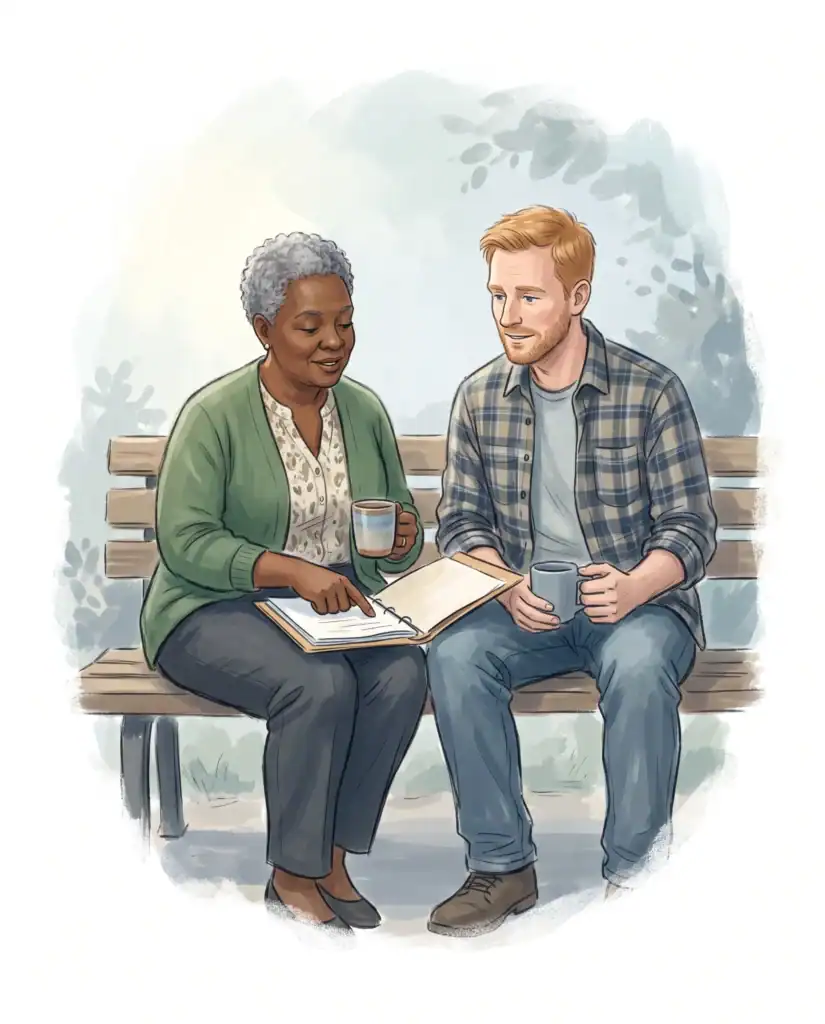
When to Seek Help
Reach out when grief intensifies rather than softens, when functioning falters, or when despair deepens. If suicidal thoughts emerge, call 911, go to the nearest ER, or call or text 988. A clinician can help sort prolonged grief, depression, PTSD, and overlapping pictures without requiring a website checklist first.
Blue Sails offers outpatient counseling and related care that can include grief and life-transition support when clinically appropriate. Related pages: adult psychotherapy, outpatient therapy, telehealth counseling, and couples and family counseling. Offices include Rockville (9600 Blackwell Road, Suite 200; page slug /locations/rockville/) and Lusby, plus statewide care when clinically appropriate. Review new patient steps when ready. Call (410) 231-0488 or use client intake; please do not email clinical details. Blue Sails accepts TRICARE and other insurance generally; verify your plan with intake. Self-pay options vary—see insurance and billing rather than unpublished fee ranges. Also see FAQs.
Normal Grief vs. Complicated Grief: How to Tell the Difference
In typical mourning, waves of sorrow often surge around reminders and then ease enough for work, connection, and occasional joy to return. Complicated or prolonged grief is discussed when yearning or preoccupation stays intense most days, numbness or avoidance crowds out daily life, and impairment persists well past culturally expected timelines. The difference is not moral strength—it is pattern, duration, and function, sorted by a clinician rather than a checklist. When children are grieving, see child and adolescent counseling.
Online and Community Bereavement Support Options
Many people combine professional counseling with community supports: faith or cultural mourning rituals, peer bereavement groups, hospice family programs, or moderated online groups. Military and veteran families may also use Military OneSource or Vet Center bereavement counseling when eligible. Telehealth can make outpatient counseling more reachable across Maryland when you are in-state during sessions; see telehealth counseling. Group formats are another option when clinically fitting: group therapy sessions. Community supports complement—not replace—clinical care when impairment is significant or safety is a concern. When a loss is shared by a whole town, workplace or community, our guide to collective trauma and shared grief explains how that differs from individual grief.
Cultural and Religious Grief Timelines You May Encounter
Cultures and faith traditions set different expectations for mourning length, rituals, and when people “should” return to work or social life. ICD-11 framing weighs whether grief exceeds what someone’s culture, religion, or community considers expected. A reaction that looks “stuck” in one community may be ordinary in another. Clinicians weigh cultural context alongside DSM-5-TR timing thresholds rather than imposing a single calendar. Honoring tradition while seeking structured support is not a contradiction.
Frequently Asked Questions
Is complicated grief the same as prolonged grief disorder?
People often use “complicated grief” informally. Prolonged grief disorder is the DSM-5-TR diagnosis with specific criteria and timing thresholds. Only a clinician can diagnose; this guide is educational.
Do I have to wait twelve months before seeking grief counseling?
No. Diagnostic waiting periods help clinicians distinguish persistent grief from still-healing grief. Support can begin earlier when distress or impairment is significant.
How is grief different from depression or PTSD?
They can overlap. Grief discussions often highlight yearning for the person who died; depression spreads low mood across life areas; PTSD centers on trauma-linked fear responses. A clinician sorts the picture.
Does insurance cover grief counseling?
Coverage often depends on whether care is billed as medically necessary psychotherapy and on your plan’s network, deductible, and authorization rules. Confirm with intake and your insurer; see insurance and billing.
Can grief counseling happen by telehealth in Maryland?
Telehealth can be one access option when you are physically in Maryland during the session and clinician licensure and your plan allow. In-person care is also available when clinically appropriate. See telehealth counseling.
Sources: APA — Prolonged grief disorder, NIMH — Coping with traumatic events, CDC — Grief and loss, 988 Suicide & Crisis Lifeline, National Center for PTSD, Military OneSource. Information is current as of November 2026 and may change. Confirm clinical questions with your Provider. This article is educational and does not create a treatment relationship.