
Outpatient therapy · Play therapy
Child play therapy and expressive therapy in Southern Maryland
Young children often show what they feel before they can say it. Blue Sails Counseling and Consulting offers play-based therapy for children at our Lusby office in Calvert County, with telehealth across Maryland. This page explains how play therapy works, what concerns it is used for, how parents stay involved and how to start.
Prefer to talk? Call (410) 231-0488

Key takeaways
-
Play is how children communicate
In play therapy, toys, art and pretend stories give a child a way to show worries and experiences they may not have words for yet.
-
Used for many concerns
Families often ask about play therapy for worry, big emotions, behavior changes, grief and hard life events. Care is matched to your child, and results vary.
-
Parents are part of it
You know your child best. Your child’s provider sets goals with you and reviews progress with you over time.
-
Lusby or telehealth
Providers who list play therapy see children at our Lusby office and by telehealth. Blue Sails accepts many plans, including TRICARE.
If you are in crisis or thinking about harming yourself, contact 911, the nearest ER, or call or text 988. Blue Sails is not an emergency service.
Why toys are a child’s first language in play therapy
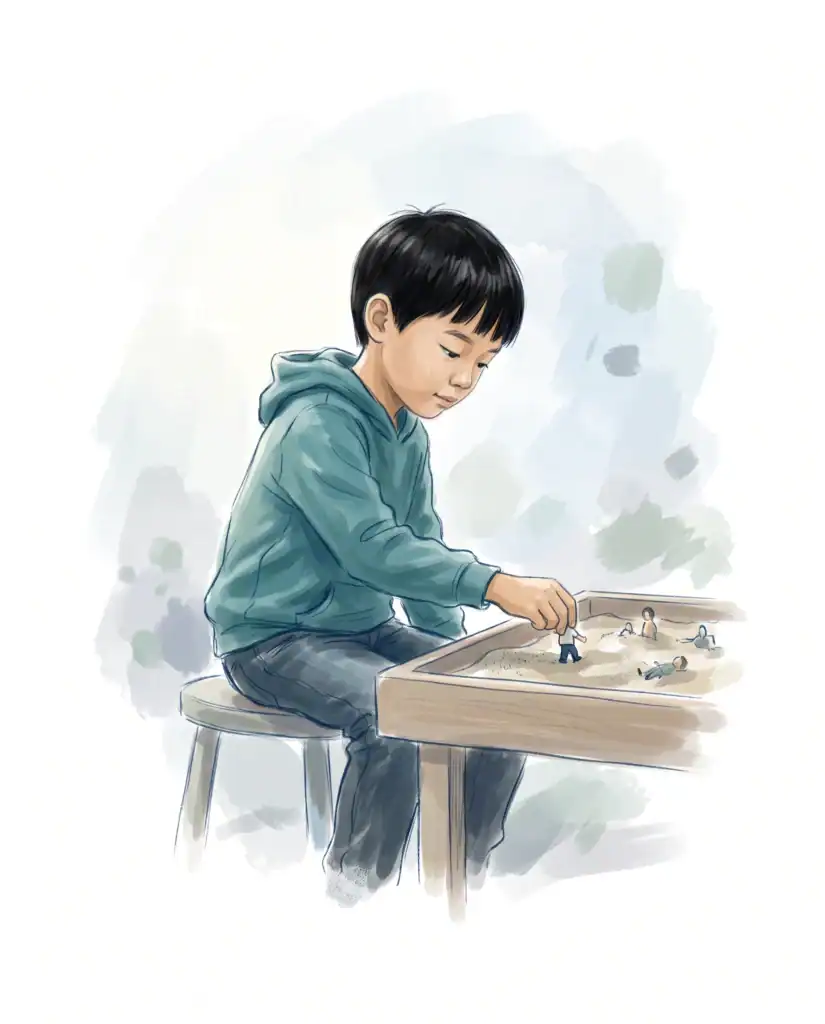
Young children are still building the language adults use to describe feelings, so play therapy does not ask them to explain everything in words. Toys, puppets, sand, clay and art supplies let a child act out people, events and worries in a way that feels safe. Play therapy pioneer Virginia Axline described play as the child’s natural medium of self-expression.
As a child plays, the provider notices themes, choices and feelings that come up, and responds in ways that help the child feel understood. A practitioner review of play therapy considerations and applications describes how different kinds of toys can invite different kinds of expression.
Child-led and directive play
In child-centered play therapy, the child leads and the provider follows, reflecting feelings and setting gentle limits. In more directive approaches, the provider guides activities aimed at a specific skill, such as calming down, naming feelings or solving a problem. Many providers blend both, based on your child’s needs and goals.
Expressive approaches
Expressive therapy uses drawing, painting, clay, sand trays, music or storytelling as ways to communicate. Some children who find talking hard are more comfortable making something first and talking about it afterward, or not at all. Your child’s provider can explain which approaches they use and why.
Which childhood struggles play therapy is used for
Families often ask about play therapy when a young child is struggling in ways that are hard to talk about. Common reasons include:
- Worry and fear: separation worries, fears that get in the way of daily routines, or worry about school or friends.
- Hard life events: a move, a divorce, a family change, a frightening experience or a loss.
- Big emotions and behavior: frequent meltdowns, anger, aggression or trouble calming down.
- Grief and sadness: the death of a loved one, a pet or a big change in the family.
Research on play therapy is promising, though study quality varies, so we describe it as one helpful option rather than a promise of results. An assessment helps your child’s provider understand what is going on and whether play therapy, another approach or a mix is the best place to start. For a neutral patient how-to on how play therapy works for young children—playroom tools, parent role, and finding a qualified clinician—see our Insights article.
For more on these concerns, see our guides to anxiety and depression and trauma and PTSD therapy. For children ages 2 to 6 with developmental or autism-related questions, our page on toddlers and preschoolers and the early-intervention autism program explain other options. If your child is still at the screening stage, our guide to understanding your child’s M-CHAT-R score explains what each score range means and what to do next.
What a play therapy session can look like

Play therapy usually happens in a room set up for children, with materials a child can choose from. Depending on the provider and the child, that can include items such as dolls and figures, puppets, building toys, art supplies, clay or a sand tray with small figures. Ask intake or your child’s provider what materials they use and how sessions are set up.
The provider sets a few clear, simple limits so the room stays safe for everyone. Within those limits, your child has room to explore, try things and tell stories through play. Over time, the provider watches for changes in how your child plays, copes and relates to others, and shares what they notice with you.
In person or by telehealth
In-person visits can be a better fit for many young children, because play materials and a dedicated space are part of the work. Some families use telehealth for parent sessions or for older children who can engage well on a screen. Ask intake which options fit your child.
How parents stay involved in play therapy
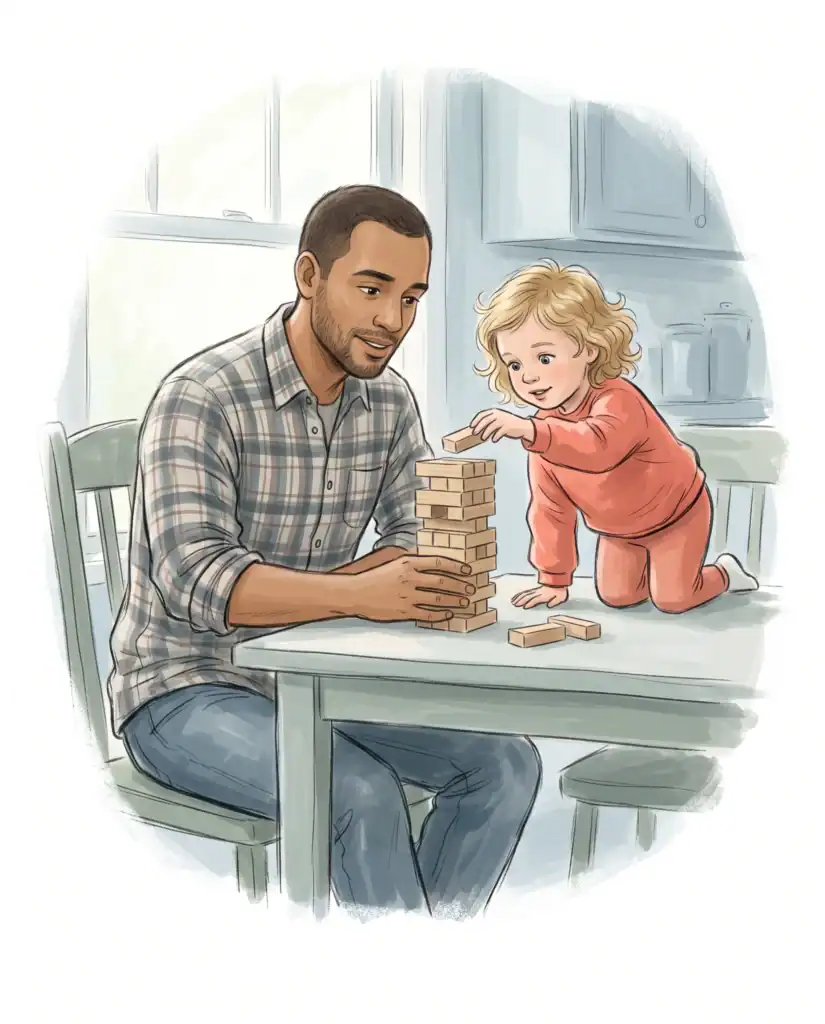
You know your child best, and your view of home, school and daily routines matters. Your child’s provider talks with you about goals at the start and checks in with you about progress over time, sometimes in parent-only sessions. How often those check-ins happen depends on your child’s plan.
Many providers also share simple ways to support your child at home, such as naming feelings out loud, keeping routines predictable and spending short, focused play time together. For caregiver-focused programs such as parent training, see our relationships and family guide. For school-age children, our guide to ADHD counseling and play therapy for elementary school children explains where play therapy fits alongside parent training and school supports.
We aim to explain why we use play and how we will review progress with you, so you know what to expect.
How Southern Maryland families get started
Blue Sails has offices in Lusby and Bethesda, with telehealth across Maryland. Providers who list play therapy on their profiles, including Katie Lewis, LCSW-C and Shelby Quade, LGPC, see children at the Lusby office and by telehealth. You can also meet our providers.
- Request an appointment online or call (410) 231-0488.
- Share your child’s age and a short description of what you are noticing at home or school.
- Note when the concerns began and how they affect daily routines, sleep, school or friendships.
- Have your insurance information ready. Our team can help you understand your benefits before care begins.
If you have questions about coverage, our insurance and costs page explains how billing works. Coverage varies by plan, service and provider.
If you are in crisis or thinking about harming yourself, contact 911, the nearest ER, or call or text 988. Blue Sails is not an emergency service.
Frequently asked questions
Ask intake about your child’s needs, coverage and current availability.
Does insurance cover play therapy?
Coverage varies by plan, service and provider. Blue Sails accepts many plans, including TRICARE. Our team can help you understand your benefits before care begins, and you can also call your insurer to ask about copays and any authorization requirements.
What ages is play therapy for?
Play therapy is most often used with young and school-age children, because play is a natural way for them to communicate. Older children and teens may use expressive approaches such as art or storytelling. Ask intake which providers work with your child’s age.
Is play therapy available by telehealth?
Blue Sails offers therapy by telehealth anywhere in Maryland. For many young children, in-person play therapy at our Lusby office is a better fit. Ask intake whether telehealth suits your child’s age and needs.
How long is a play therapy session?
Session length can vary with your child’s age, attention and treatment plan. Your child’s provider will confirm the length when you schedule.
What should I do if my child is in crisis?
If you are in crisis, call 911, go to the nearest ER, or call or text 988. Blue Sails is not an emergency service. For non-urgent questions, call the office during business hours.
Ask about play therapy for your child
Tell intake what you are noticing and how you would like to meet. Blue Sails has offices in Bethesda and Lusby, with telehealth across Maryland.
If you are in crisis, call 911, go to the nearest ER, or call or text 988.