
Couples & families
Couples counseling, marriage repair and family systems therapy in Maryland
Work on communication, conflict and trust as a couple, or bring your family together for change. Meet in Bethesda, in Lusby or by telehealth anywhere in Maryland.
Prefer to talk? Call (410) 231-0488

Key takeaways: couples and family counseling in Maryland
- Blue Sails offers couples and family therapy in person in Bethesda and Lusby, and by telehealth anywhere in Maryland.
- Couples counseling helps partners notice the patterns that keep conflict going, talk more openly and rebuild trust. Family therapy brings the people in a household together to work on communication and change.
- Approaches vary by provider. Your provider explains how they work and agrees on goals with both of you.
- Couples counseling is not the right first step when someone is unsafe at home. Safety comes first, and individual support is available.
- Outpatient care is not emergency care. If you are in crisis or thinking about harming yourself, call 911, the nearest ER, or call or text 988.
What is couples counseling?
Couples counseling is talk therapy with both partners in the room, or on screen together. A licensed provider helps you understand the patterns behind recurring arguments, make room for each person’s point of view and practice new ways of responding. You do not need to be married, and you do not need to be in crisis to start.
Couples come in for many reasons: the same argument on repeat, growing distance, a breach of trust, stress around parenting or money, a move or deployment, or a big decision about the future. Some come to strengthen a relationship that is mostly working. Others come to decide what comes next.
Family therapy works the same way with more people. Parents, children, stepparents or other relatives meet together so the family can work on communication, roles and change as a whole, rather than placing the problem on one person.
Recognizing the patterns behind repeated conflict
Most couples argue. What matters more is how conflict starts, how it escalates and whether you can find your way back to each other afterward. The Gottman Institute describes four communication patterns, which it calls the Four Horsemen, that its research links with relationship distress:
- Criticism: attacking your partner’s character instead of describing a specific problem.
- Contempt: sarcasm, eye-rolling or mockery that signals disrespect.
- Defensiveness: answering a complaint with excuses or a counterattack.
- Stonewalling: shutting down or withdrawing from the conversation.
Noticing these patterns is a starting point, not a verdict on your relationship. In counseling, partners practice alternatives, such as raising a concern gently, expressing appreciation, taking responsibility for part of the problem and taking a break before returning to the conversation. The Gottman Institute suggests that a break last at least 20 minutes, since that is about how long the body takes to calm down. For more on attachment and family patterns, see our relationships and family guide.
Couples also learn to make and accept repair attempts: small gestures, like a touch of humor, an apology or “can we start over?”, that lower the temperature during a hard conversation.
Approaches couples and families often ask about
Several research-based approaches are used in couples and family therapy. Approaches vary by provider, and your provider will explain how they work and why.
Gottman Method
Developed from the research of John and Julie Gottman, this approach focuses on friendship, managing conflict and building shared meaning, with practical skills couples can use between sessions.
Emotionally Focused Therapy (EFT)
The International Centre for Excellence in Emotionally Focused Therapy describes EFT as an evidence-based approach that draws on attachment theory. It helps partners understand the emotions and needs underneath their conflict and respond to each other in ways that build security.
Family systems approaches
Family systems therapy looks at the family as a connected whole. Instead of focusing on one person as “the problem,” it explores roles, patterns and communication across the household, and how a change for one person affects everyone else. Our relationships and family guide explains parent training and other family systems approaches in more detail.
Blue Sails providers draw on approaches such as cognitive behavioral therapy and family systems therapy. If you would like a provider who uses a specific model, such as the Gottman Method or EFT, ask our intake team about current availability before you schedule.
What happens in your first couples therapy session
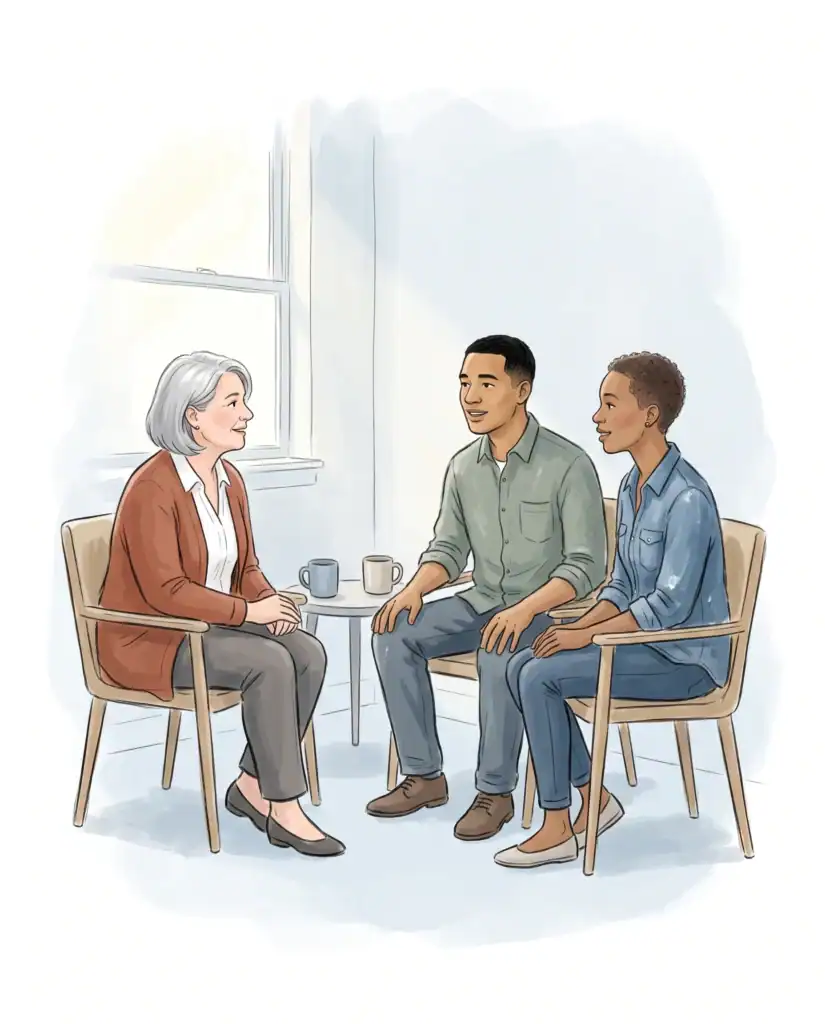
The first session is mostly about getting to know you as a couple. Your provider will ask what brings you in, how long things have felt this way, what you have already tried and what you each hope will change.
- Your history together: how you met, major changes and what has worked well in the past.
- Current concerns: the arguments or stresses that feel most pressing right now.
- Safety: your provider asks about safety at home, sometimes with each partner individually, to make sure couples counseling is a good fit.
- Goals: a few concrete goals you both agree on, which you review together over time.
- Ground rules: how sessions will work, including how your provider handles anything one partner shares privately.
Most sessions last about 50 minutes. How often you meet, and for how long, depends on your goals, and you can talk about pacing with your provider at any point.
When safety is a concern
Couples counseling works when both partners can speak openly without fear. If there is intimate partner violence, threats, or control that makes one partner afraid, joint sessions can increase risk. In that case, providers usually recommend individual support first, along with a safety plan.
Your provider may meet with each partner separately to understand what is happening and to help you find local resources. You will not be asked to sit in a joint session if it is not safe to do so.
If you or someone in your home is in immediate danger, call 911, the nearest ER, or call or text 988.
Rebuilding trust after infidelity or betrayal
Discovering an affair, hidden money problems or another breach of trust can upend a relationship. The partner who was hurt may feel shock, anger and a need for answers. The partner who broke trust may feel shame and want to move on quickly. Both reactions are common.
Counseling gives you a structured place to slow down. Work often includes understanding what happened and why, taking responsibility, agreeing on what transparency will look like and, over time, deciding together whether and how to rebuild. There is no set timeline, and counseling does not decide for you whether the relationship continues.
Support for military, commuter and blended families
Couples counseling through military deployments

Deployments, training cycles and PCS moves put real strain on relationships. Before a deployment, couples can plan how they will communicate, divide responsibilities and handle decisions while apart. During and after, counseling can help with reconnecting, shifting roles at home and the stress of reintegration.
Blue Sails accepts TRICARE and works with veterans and military families. Telehealth can help keep sessions consistent around a demanding schedule.
Eligible service members and their families can also get free, confidential non-medical counseling through Military OneSource, generally up to 12 sessions per issue, for concerns such as relationship stress, deployment and reintegration. It is short-term support rather than treatment for a diagnosed condition. Call Military OneSource at 800-342-9647 to check eligibility.
When you live apart: counseling for commuter couples
Long commutes, travel-heavy jobs and two-home arrangements can leave partners feeling more like roommates. Telehealth lets you attend sessions together from different locations. Telehealth is available to clients located in Maryland, so if one partner lives or travels outside the state, ask our intake team what options fit your situation.
Blended families: stepparenting without power struggles
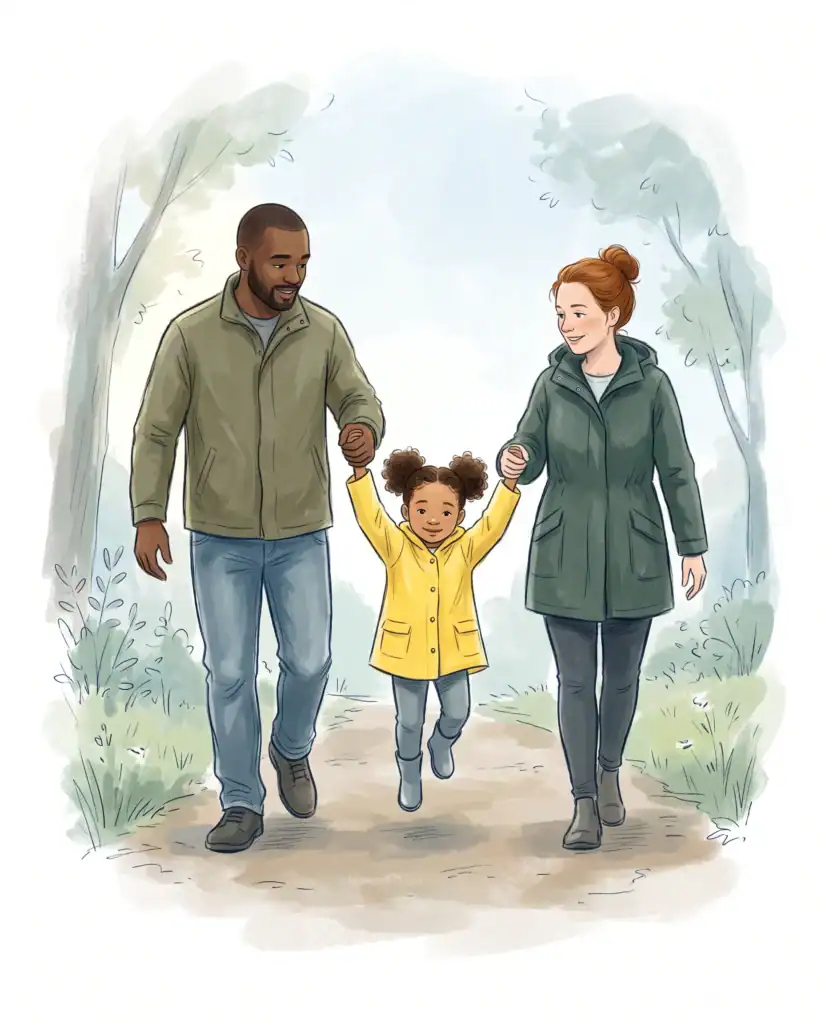
Blending families means new roles, routines and loyalties for everyone. Stepparents often feel caught between wanting to help and not wanting to overstep, and children may need time before they accept a new adult’s authority.
Family therapy can help adults agree on house rules and parenting roles, give children a voice and make space for the relationships children already have, including with a parent in another home.
Family therapy for parents of children with autism or ADHD
Raising a child with autism or ADHD can strain a couple’s time, energy and sense of being on the same team. Parents may disagree about routines, discipline or treatment, and siblings may feel overlooked.
- Couples sessions can help parents share the load, support each other and make decisions together.
- Family sessions can help siblings understand what is going on, share their own feelings and feel seen.
- Parents can learn consistent, practical strategies for routines and behavior that work at home.
For young children, Blue Sails also offers an early-intervention autism program.
If your partner is not ready to attend
You can still get support on your own. Individual therapy can help you understand your part in the pattern, clarify what you want and practice new ways of responding, which often changes how conversations at home go. Learn more about therapy for adults.
If anxiety, depression or another concern is affecting your relationship, a psychiatric evaluation and medication management are available by telehealth, coordinated with your therapy when you want them to be.
Choosing a couples counselor in Maryland
In Maryland, couples and family therapy can be provided by several kinds of licensed professionals. The Maryland Board of Professional Counselors and Therapists licenses marriage and family therapists as LCMFTs and LGMFTs (licensed graduate marriage and family therapists, who practice under supervision). Licensed clinical professional counselors (LCPC), licensed certified social workers–clinical (LCSW-C) and psychologists may also provide couples therapy.
A license confirms that a provider can practice in Maryland. It does not, by itself, tell you about their training in couples work. Questions worth asking include:
- How do you usually work with couples or families?
- How do you handle information one partner shares privately?
- How do we set goals and check whether sessions are helping?
- Do you offer telehealth, in-person sessions or both?
To check a license, search the Maryland Board of Professional Counselors and Therapists license lookup by name or license number. Confirm that the name and license type match and that the status is active. Social workers and psychologists are licensed by their own state boards, so look up an LCSW-C or a psychologist with that board.
You can meet our providers before you reach out.
Paying for couples and family therapy
Blue Sails accepts insurance, including TRICARE, and offers self-pay and sliding-scale options for those who qualify. Coverage for couples and family therapy varies by plan and service, so see insurance and costs or ask our intake team to check your benefits and expected cost before you schedule.
To get started, complete our client intake or call (410) 231-0488. Let us know whether you are looking for couples or family therapy and whether you prefer Bethesda, Lusby or telehealth.
If you need help right now
If you are in crisis or thinking about harming yourself, call 911, the nearest ER, or call or text 988.
The 988 Suicide & Crisis Lifeline is free, confidential and available 24/7 by call, text or chat. See our crisis resources for more options in Maryland.
Questions couples and families ask before starting
Does Blue Sails offer couples counseling?
Yes. Blue Sails offers couples and family therapy in person in Bethesda and Lusby, and by telehealth anywhere in Maryland.
Can unmarried or dating couples come to couples counseling?
Yes. You do not need to be married to start. Couples counseling is open to partners in a committed relationship, whether you are dating, living together or engaged, and sessions can focus on communication, trust and recurring conflict.
Can engaged couples start counseling before they marry?
Yes. You do not need to be in crisis to begin. Some engaged couples use sessions before the wedding, often called premarital counseling, to talk through communication, money, family expectations and shared goals. Let our intake team know you are looking for couples counseling before marriage and whether you prefer in-person or telehealth sessions.
Can we do couples counseling by telehealth?
Yes. Telehealth is available to clients located in Maryland, and partners can join from the same room or from different locations. You need a private space, a reliable connection and a phone, tablet or computer.
Does insurance cover couples or family therapy?
Coverage varies by plan and service. Blue Sails accepts insurance, including TRICARE, and offers self-pay and sliding-scale options for those who qualify. Ask our intake team to check your benefits and expected cost before you schedule.
Do we always have to attend sessions together?
Not always. Most couples sessions include both partners, but your provider may meet with each of you individually at times, such as during the first assessment. Your provider will explain how they handle what each partner shares.
Is what we share in couples sessions confidential?
Yes, with limits. What you share stays private, but the law makes some exceptions, such as a risk of serious harm or a court order. Your provider will explain these limits before you begin, along with how they handle anything one partner shares privately. If you are separating, a family law attorney can tell you how records might be used.
What if one of us does not feel safe at home?
Safety comes first. Couples counseling is not recommended when there is violence, threats or fear at home, and individual support is available instead. If anyone is in immediate danger, call 911, the nearest ER, or call or text 988.
What if we are not sure we want to stay together?
You can still come in. Counseling can help you both understand what is happening and think through your options together. It does not push you toward a particular outcome.
How long does couples counseling take?
It depends on your goals and what you are working on. You and your provider agree on goals at the start and review progress together, so you can talk about pacing at any time.
Explore related care and resources
Explore related services, the counties we serve and answers to common questions.
- Outpatient therapy
- Therapy for adults
- Veterans and military families
- Autism services
- Medication management
- Bethesda office
- Lusby office
- Montgomery County
- Calvert County
- St. Mary’s County
- Charles County
- Prince George’s County
- Anne Arundel County
- Insurance and costs
- Common questions
- Behavioral health care in Maryland for every age
You can start with a question
Tell intake whether you are looking for couples or family therapy, what has been going on and whether you prefer in person or telehealth. Ask about fit, costs and next steps before you schedule.
If you are in crisis or thinking about harming yourself, call 911, the nearest ER, or call or text 988.