
Children and adolescents · Ages 6–18
Child and adolescent mental health services in Maryland (ages 6–18)
Worried about your child’s mood, worries, attention or school stress? Learn the red flags to watch for, how therapy and psychiatry work for kids and teens, and how to start care in person or by telehealth across Maryland.
Prefer to talk? Call (410) 231-0488
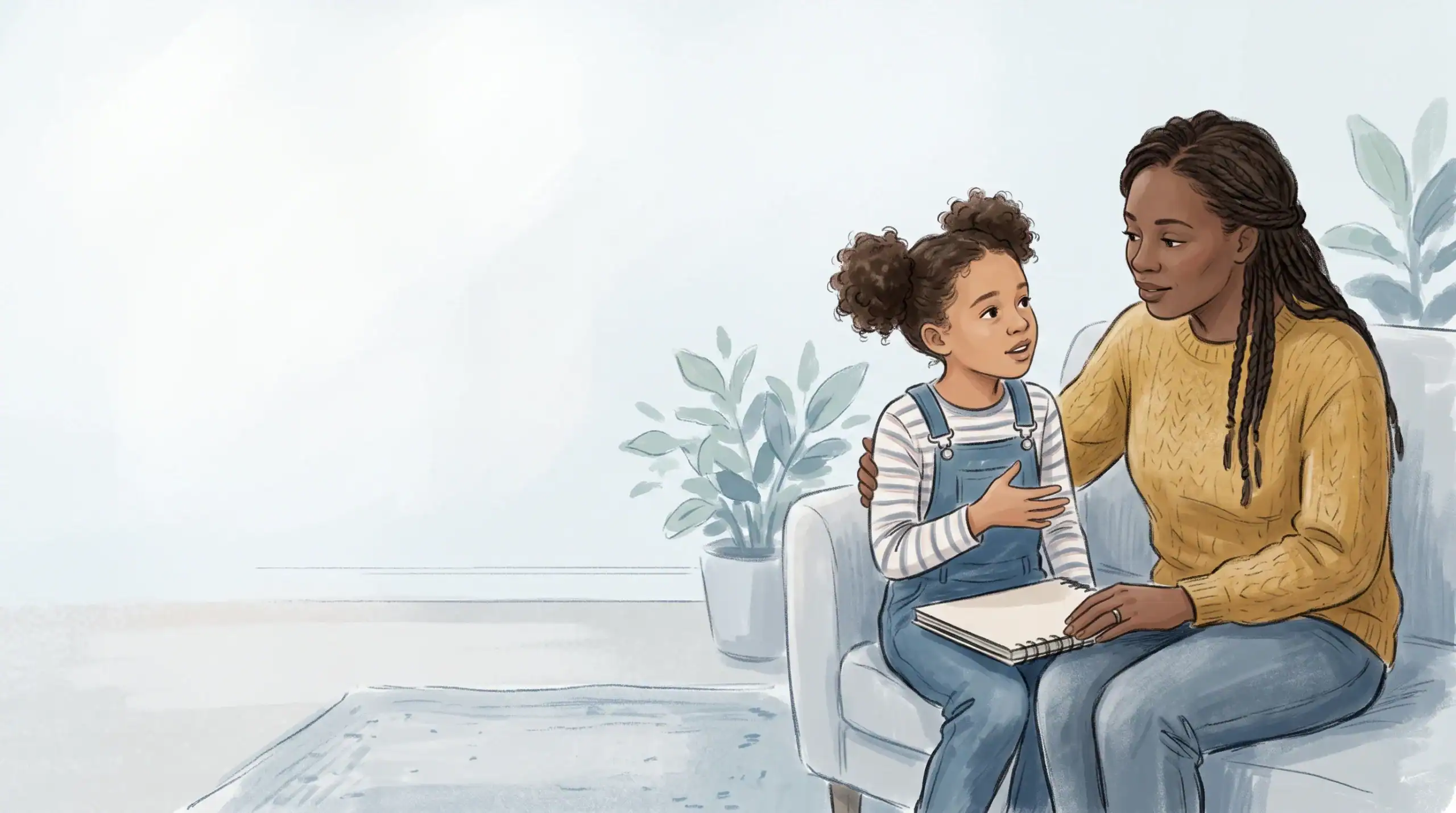
Key takeaways: child and adolescent mental health in Maryland
- Changes that last for weeks and get in the way of school, friendships or home life are worth a closer look. A single bad day is not a red flag.
- Anxiety, ADHD, depression and behavior problems are among the most commonly diagnosed mental health conditions in children, according to the CDC.
- Your pediatrician and your child’s school can both be starting points. You can also contact a licensed mental health provider directly.
- Blue Sails offers outpatient therapy for school-age children and teens, including family therapy, and psychiatric evaluation and medication management. Psychiatry is available by telehealth.
- We see families in Bethesda and Lusby, and by telehealth anywhere in Maryland. If you are in crisis, call 911, go to the nearest ER, or call or text 988.
Growing pains or a child mental health red flag?
Every child has hard days. Moodiness, worry before a test or a short stretch of poor sleep can be part of growing up. The difference is usually how long a change lasts, how intense it is and how much it gets in the way of daily life. Parents are often the first to recognize that something has shifted.
Signs that are worth discussing with your child’s doctor or a mental health provider include:
- Sadness, irritability or withdrawal that lasts two weeks or more
- Worry or fears that keep your child from school, activities or sleep
- Big changes in eating, sleep or energy
- Falling grades, frequent trips to the school nurse or refusing to go to school
- Pulling away from friends or activities they used to enjoy
- Talk of hopelessness, self-harm or not wanting to be alive
The National Institute of Mental Health encourages families to seek an evaluation when behavior changes are persistent or severe. MedlinePlus also lists warning signs, such as self-destructive behavior, that call for prompt attention. Talk of self-harm always deserves an immediate response: If you are in crisis, call 911, go to the nearest ER, or call or text 988.
As a Maryland practice offering mental health care for children and teens in person and by telehealth, we can help you sort out what you are seeing and what a sensible next step looks like. For a deeper look at common concerns, see our guide to teen mental health covering depression, anxiety, OCD and school refusal.
Anxiety, ADHD, depression and school refusal in kids
These concerns often overlap, which is one reason a careful evaluation matters. A child who avoids school may be dealing with anxiety, low mood, attention problems, bullying or a learning difference, or several of these at once. Our neurodivergence and ADHD guide covers attention and learning differences in more depth.
- Anxiety can show up as stomachaches, clinginess, trouble sleeping, constant “what if” questions or avoiding situations that feel scary.
- ADHD can look like trouble focusing, forgetfulness, restlessness or acting before thinking, in more than one setting such as home and school.
- Depression in children and teens can look like irritability, boredom or anger as often as sadness, along with changes in sleep, appetite and energy.
- School refusal is usually a sign of distress, not defiance. Morning complaints, tears or panic about going to school are worth taking seriously.
Avoidance can make worry grow over time. Therapy approaches such as cognitive behavioral therapy (CBT) help children notice anxious thoughts and practice facing feared situations in small, manageable steps. For some children, a prescriber may also discuss medication as one part of a broader plan that includes therapy and school support.
Families looking for a child psychiatric provider and counseling in Calvert County, Montgomery County or elsewhere in Maryland can access both through our licensed Maryland clinicians, with therapy in person or by telehealth and psychiatry by telehealth. LGBTQIA+ young people and their families can also read our guide to LGBTQIA+ affirming mental health care for youth and adults.
Where to start: evaluations for Maryland families
You do not need to have every answer before you ask for help. Many families start with whoever they already know: a pediatrician, a school counselor or a mental health provider.
First steps for parents
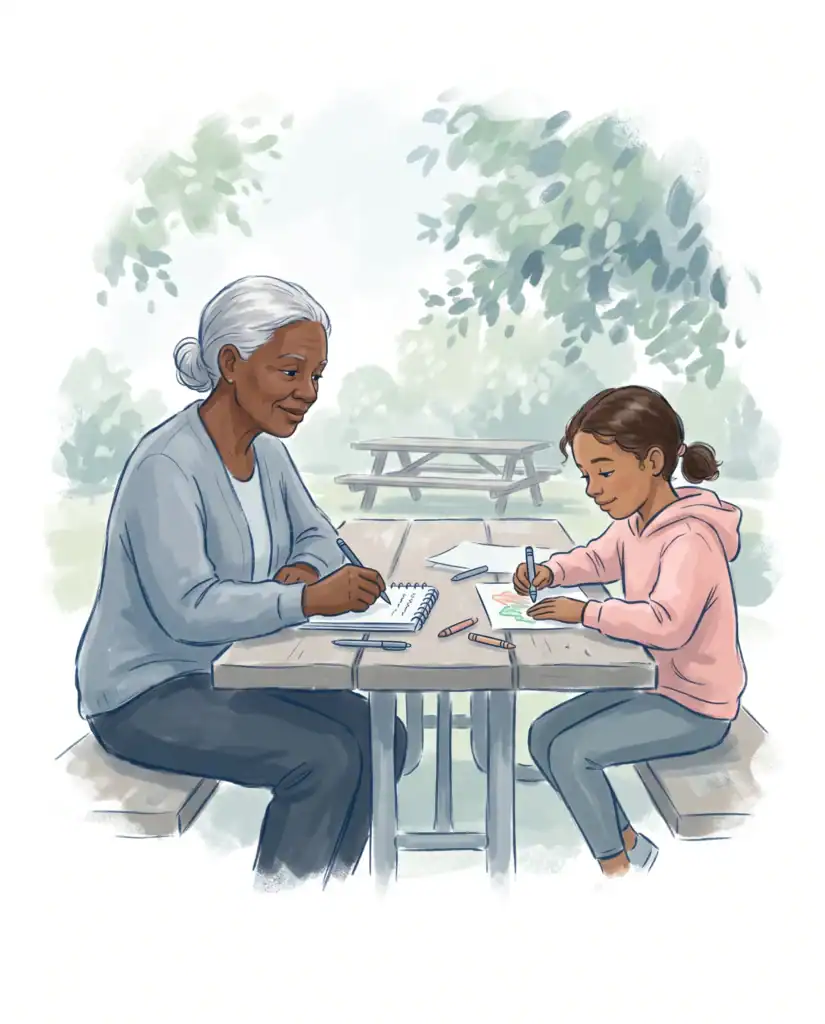
- Write down what you are noticing, when it started, how often it happens and what seems to make it better or worse.
- Ask your child’s teacher or school counselor what they see during the school day.
- Schedule a visit with your pediatrician to rule out medical causes, such as sleep problems or thyroid issues, and to ask about screening.
- Contact a licensed mental health provider for an evaluation. It is fine to ask about experience with children your child’s age, approaches used and how parents are involved.
If there is immediate danger, call 911, go to the nearest ER, or call or text 988.
School-based starting points
Your child’s school counselor, school psychologist or student support team can share observations, connect you with school-based services and explain how to request an evaluation for learning or attention concerns. Many Maryland schools also partner with community mental health programs. Ask your school what is available.
If you have a younger child with developmental or autism-related questions, see our page for toddlers and preschoolers and our early-intervention autism program for children ages 2–6.
Pediatric screening and referrals
Pediatricians often use brief questionnaires to screen for anxiety, depression and attention concerns. A positive screen is not a diagnosis. It is a signal that a fuller evaluation could help. In Maryland, pediatric primary care practices can consult with child mental health providers through BHIPP, a free statewide program that supports pediatricians in caring for children’s behavioral health.
Your pediatrician may refer you to a therapist, a psychiatric provider or a psychologist for testing, depending on the concern. For questions about autism, Blue Sails offers autism evaluations and diagnosis with a PsyD clinician. The Maryland Department of Health also lists public behavioral health services for children, adolescents and young adults.
If your child’s needs feel complex, your pediatrician does not have to sort them out alone. Through Maryland BHIPP (Behavioral Health Integration in Pediatric Primary Care), Maryland pediatricians, family doctors, nurse practitioners and school nurses can get free consultation on child mental health questions such as diagnosis, medication and local referral options. BHIPP does not consult directly with families, but you can ask your child’s primary care clinician to call.
Play therapy and emotional regulation (ages 6–11)

Younger children often express feelings through play more easily than through words. In play-based therapy, toys, art and games give children a way to work through worries, make sense of hard experiences and practice new skills. Parents are usually involved too, so skills can carry over to home. For caregiver-focused programs such as parent training, see our relationships and family guide.
How play therapy works
In child-centered play therapy, the child leads and the therapist follows, reflecting feelings and setting gentle limits. In more directive approaches, the therapist guides activities that target a specific skill, such as calming down or problem-solving. Many therapists blend both, based on the child’s needs. Research on play therapy is promising, though study quality varies, so we describe it as one helpful option, not a promise of results.
Building emotional regulation skills
Emotional regulation means noticing a feeling and handling it without being overwhelmed by it. Children can learn to name feelings, notice body signals such as a racing heart, and use calming tools like slow breathing or taking a break. These skills support friendships, learning and family life, and can lay groundwork for the years ahead, including lower risk of turning to substance use to cope.
Choosing a play therapist
Ask about training and experience with children your child’s age. The Association for Play Therapy offers a Registered Play Therapist credential for clinicians with specific play therapy training and supervision. You can also ask how the therapist involves parents and how progress will be reviewed. At Blue Sails, ask intake about play-based therapy for young children and which providers are a good fit for your child.
ADHD skills support for elementary students: how it works
Children with ADHD often know what they are supposed to do but struggle to get started, stay organized or follow through. Skills support focuses on the practical side of daily life: routines, planning and self-monitoring.
- Structured routines. Predictable morning, homework and bedtime routines reduce the number of decisions a child has to make.
- Breaking tasks into steps. Short, clear steps with visual checklists make big assignments feel doable.
- Positive reinforcement. Noticing and rewarding effort tends to work better than focusing on mistakes.
- Parent training. Behavioral parent training teaches caregivers consistent ways to respond, which is a recommended part of care for younger children with ADHD.
- School partnership. Teachers can add supports such as preferential seating, check-ins or extra time.
ADHD often occurs alongside anxiety, learning differences or mood concerns, so an evaluation that looks at the whole child matters. Treatment plans can include therapy, parent support, school accommodations and, when appropriate, medication managed by a prescriber. Ask our team how therapy and medication management can work together for your child.
Teen social anxiety and academic stress: what helps

Some nervousness before a presentation is normal. Social anxiety goes further: a strong, lasting fear of being judged that leads teens to avoid class participation, social events or even school. According to the U.S. Office of Population Affairs, an estimated 31.9% of adolescents will experience an anxiety disorder at some point during their teen years. Low mood is common too. In the 2024–2025 Maryland Youth Risk Behavior Survey, 31.7% of high school students and 31.9% of middle school students reported persistent feelings of sadness or hopelessness, down from 39.2% and 36.8% in 2021–2022.
Recognizing the signs
- Avoiding eye contact, speaking up in class or eating in front of others
- Physical symptoms such as blushing, shaking, nausea or a racing heart in social situations
- Skipping school, practices or events, or leaving early
- Spending a long time worrying before, and replaying after, social situations
Social anxiety often begins in childhood or adolescence. Without support, avoidance can narrow a teen’s world over time.
Coping with academic stress
Heavy workloads, tests and college pressure can add up. Helpful habits include protecting sleep, breaking big projects into smaller steps, scheduling breaks and limiting late-night screen time. CBT can help teens challenge all-or-nothing thinking about grades and practice facing stressful situations gradually. The Merck Manual describes CBT as a first-line treatment for social anxiety in children and adolescents.
Social media and screen time
The U.S. Surgeon General’s 2023 advisory on social media and youth mental health notes that children and adolescents who spend more than three hours a day on social media face double the risk of poor mental health outcomes, including symptoms of depression and anxiety. Practical steps can help: keep phones out of bedrooms overnight, set tech-free times such as meals, and talk with your teen about how their feeds make them feel. If online stress, comparison or lost sleep is part of what you are seeing, bring it up with your teen’s provider.
Accessing school-based support
School counselors, school psychologists and school-based health centers can offer support during the day and help with accommodations. With your permission, a teen’s provider can coordinate with the school team. If anxiety escalates into crisis, call 911, go to the nearest ER, or call or text 988.
Teen counseling with CBT and DBT (ages 12–18)
Teens often do well in therapy when they feel respected and have a real say in their goals. We match each approach to your teen’s symptoms, goals and safety needs through outpatient therapy.
- Cognitive behavioral therapy (CBT) helps teens notice the links between thoughts, feelings and actions, and practice new ways of responding. It is well studied for anxiety and depression in adolescents.
- Dialectical behavior therapy (DBT) skills focus on handling intense emotions, tolerating distress, mindfulness and relationships. DBT was developed for people with intense emotions and has been studied with adolescents at higher risk of self-harm.
- Family involvement can strengthen therapy for many teens, especially for depression. Parents may join some sessions or meet separately with the provider.
Not every provider offers every approach, so ask intake which providers are trained in the approach you are interested in, and whether a teen group is currently available. The American Academy of Child and Adolescent Psychiatry has a helpful overview of psychotherapies for children and adolescents.
Child therapist or pediatric psychiatric provider?
Understanding the roles
A child therapist, such as a licensed clinical social worker, licensed professional counselor or psychologist, provides talk therapy and skills-based treatment. A child and adolescent psychiatrist is a physician who can diagnose, prescribe and monitor medication. Psychiatric mental health nurse practitioners (PMHNPs) can also evaluate and prescribe. Psychologists can also provide psychological testing.
Matching care to needs
Many children start with therapy. A psychiatric evaluation may help when symptoms are severe, keep getting in the way despite therapy, or when the diagnosis is unclear. Often the two work together. At Blue Sails, therapy is available in person or by telehealth and psychiatry is available by telehealth, so your child’s providers can coordinate care with your permission.
For urgent concerns that can’t wait, contact a provider right away. If there is immediate danger, call 911, go to the nearest ER, or call or text 988. When you call or text 988, a live, trained counselor will respond.
Medication for children and teens: start low, go slow
If medication is part of the conversation, a prescriber usually starts with a low dose and adjusts slowly, watching for benefits and side effects. There is no standard dose that fits every child, so follow-up visits matter.
- Ask what the medication is for, what changes to watch for and how long it may take to see an effect.
- Share any other medicines, supplements or health conditions.
- Do not stop a medication suddenly. Talk with the prescriber first.
- Antidepressants carry an FDA warning about suicidal thoughts in some young people, especially under age 25. If thoughts of suicide start or get worse, call 911, go to the nearest ER, or call or text 988.
Medication is one option, not a requirement. Your child’s prescriber will explain the reasonable options, including non-medication choices, so you can decide together. Learn more about medication management at Blue Sails.
What to expect at your child’s first appointment
Before we ever talk about medication management, we start with a conversation. A first visit usually covers what brings you in, your child’s development, health, school and family life, and what you hope will change. The American Academy of Child and Adolescent Psychiatry describes what a comprehensive psychiatric evaluation can include.
- Bring your insurance card, a list of current medications and any past evaluations, report cards or school plans.
- Your child may meet with the provider alone for part of the visit, especially teens. Providers explain confidentiality at the start, including when safety concerns must be shared.
- You will talk through recommendations and next steps together. Plans are reviewed over time and can change as needs change.
You can start by completing our client intake or calling us at (410) 231-0488.
504 plan vs. IEP in Maryland
If a mental health condition affects learning, your child may qualify for school support. A 504 plan provides accommodations, such as extra time, breaks or a quiet testing space, for students whose disability limits a major life activity. An IEP (Individualized Education Program) provides specialized instruction and services for students who qualify for special education.
Working with the IEP team
- Put your request for an evaluation in writing and keep a copy.
- Maryland sets deadlines for evaluations and meetings. Ask the school for the timeline in writing.
- You are part of the team. You can bring notes, outside reports and a support person to meetings.
- Ask for draft documents ahead of the meeting so you have time to review them.
- With your permission, your child’s provider can share information that helps the school team plan supports.
Paying for child and teen mental health care
Most health plans include mental health benefits. The Maryland Insurance Administration explains your rights, including what to do if you can’t get an in-network appointment within a reasonable time or distance. For non-urgent behavioral health therapy, that means an in-network appointment within 10 calendar days. Starting January 1, 2026, if your plan can’t offer an appointment within the time or distance set by Maryland regulation, it must help you get one with an out-of-network provider, covered the same as in-network. You can reach the MIA at 800-492-6116. Children with Maryland Medicaid may be eligible for public behavioral health services. Specialty behavioral health care is carved out of managed care, so all Medicaid members, including HealthChoice members, access it through Carelon, Maryland Medicaid’s behavioral health administrative services organization. Most behavioral health medications are also processed by the Medicaid fee-for-service pharmacy program rather than your child’s managed care organization. For children and youth with more intensive needs, Maryland also offers 1915(i) services.
Maryland’s 1915(i) program offers home and community-based services for young people with intensive behavioral health needs who may be at risk of hospitalization or residential treatment. Services can include in-home support, family and youth peer support, and respite care for caregivers. Youth ages 6–21 who have Maryland Medicaid, or are eligible for it, generally need two or more hospital stays, emergency room visits, mobile crisis responses or crisis center visits in the past 12 months, or a residential treatment stay within the past 90 days. Families enroll through a local Care Coordination Organization (Maryland Department of Health).
Some help may also be available at school. The Maryland Department of Health has expanded Medicaid coverage so public schools can offer certain behavioral health services, including diagnostic evaluations and individual, family and group therapy from licensed school psychologists and school social workers, to students enrolled in Medicaid, even without an IEP or IFSP. A behavioral health diagnosis is still required. Ask your child’s school whether these services are available there.
Blue Sails accepts TRICARE. Coverage depends on your plan, so see insurance and costs or ask our intake team to check your benefits before you schedule.
When crisis hits: mobile crisis teams and 988 in Maryland
If you are in crisis, call 911, go to the nearest ER, or call or text 988.
The 988 Suicide & Crisis Lifeline is free, confidential and available 24/7 by call, text or chat. A trained crisis counselor answers. According to the Maryland Department of Health, 988 can also connect you to in-person mobile crisis help when appropriate. Mobile crisis response is available across Maryland, though hours vary by county.
After a crisis, follow up with your child’s providers to update the safety plan and next steps.
Questions from families like yours
Will my teen’s therapy sessions stay confidential?
Providers explain confidentiality at the first visit. Teens usually have some private time with their provider, which helps build trust. Some information may be shared with parents, and providers must act when there is a safety risk. Ask your teen’s provider how they handle this so everyone knows what to expect.
Can my child have therapy by telehealth anywhere in Maryland?
Yes. Blue Sails offers therapy by telehealth anywhere in Maryland, and psychiatry is available by telehealth. In-person visits are available in Bethesda and Lusby. Ask intake whether telehealth or in-person care is a better fit for your child’s age and needs.
What if my child is younger than six?
See our page for toddlers and preschoolers. Blue Sails offers autism evaluations and an early-intervention autism program for children ages 2–6, and play-based therapy for young children.
What happens when my teen turns 18?
At 18, your young adult makes their own health care decisions and decides what information is shared with parents. Blue Sails also works with adults, so ask your provider how to plan for the transition ahead of time.
How involved will parents be in sessions?
It depends on your child’s age and needs. Care for younger children often includes parents directly, while teens usually have some private time with their provider. Your child’s provider will explain your role and the limits of confidentiality at the start, and involvement can change over time.
Do we need a referral from our pediatrician?
It depends on your insurance plan. Some plans require a referral or authorization before therapy or psychiatric care, and others do not. You can contact intake with questions before you have a referral, and intake can help you check what your plan requires before the first visit.
How soon can my child get a first appointment?
Wait times vary by provider, location and whether you choose telehealth, so ask intake about current openings. If you use insurance, Maryland rules say non-urgent behavioral health therapy should be available in-network within 10 calendar days, and starting in 2026 your plan must help you find an out-of-network provider, covered as in-network, if it can’t meet the standard. If you are in crisis, call 911, go to the nearest ER, or call or text 988.
What do LCSW-C, LCPC and psychologist mean?
In Maryland, an LCSW-C is a Licensed Certified Social Worker-Clinical and an LCPC is a Licensed Clinical Professional Counselor. Both hold master’s degrees and are licensed to provide therapy. A licensed psychologist holds a doctoral degree and often provides psychological testing as well as therapy. Each license is issued by a different Maryland board. Psychiatric providers, such as psychiatrists and psychiatric nurse practitioners, can prescribe medication.
How do we get started?
Complete our client intake or call (410) 231-0488. Our team will ask about your child’s needs, your insurance and your preferred location or telehealth, then help match your child with a licensed provider.
Explore related care and resources
Explore related services, the counties we serve and answers to common questions.
- Outpatient therapy
- Medication management
- Toddlers and preschoolers (ages 2–6)
- Autism services
- Autism evaluations and diagnosis
- Bethesda office
- Lusby office
- Calvert County
- St. Mary’s County
- Charles County
- Prince George’s County
- Anne Arundel County
- Montgomery County
- Insurance and costs
- Common questions
- Behavioral health care in Maryland for every age
You can start with a question
Tell intake your child’s age, what has been going on and what you need help sorting out. Ask about fit, costs and next steps before you schedule.
If you are in crisis, call 911, go to the nearest ER, or call or text 988.