
Children and adolescents · Tweens and teenagers
Teen Therapy in Maryland for Tweens and Teenagers (Ages 12–18)
Teen therapy in Maryland can help tweens and teenagers with worry, low mood, school stress, friendship and family conflict, and big life changes. This guide covers common reasons teens start therapy, how CBT, ACT and DBT skills work, when a psychiatric evaluation may help, what Maryland law says about teen consent, how school supports fit, and how to start care at Blue Sails.
Prefer to talk? Call (410) 231-0488

Key takeaways
-
Many reasons are common
Worry, low mood, school stress, bullying, grief and family changes are common reasons families reach out for teen therapy.
-
Therapy builds skills
CBT, ACT and DBT are approaches providers use to help teens build coping skills. Your teen’s provider matches the approach to their needs.
-
Psychiatry when it fits
A psychiatric evaluation may help when symptoms are severe, keep getting in the way or are unclear. Medication may be considered alongside therapy when clinically appropriate.
-
Consent and school have rules
Maryland law lets some minors consent to their own mental health care, with limits. Schools decide 504 and IEP eligibility through their own process.
Common reasons tweens and teens start therapy
The teen years bring fast changes in school, friendships, independence and identity. Some stress and moodiness is a normal part of growing up. It may be time to talk with a provider when changes last for weeks and get in the way of school, home life or friendships. For a neutral how-to on teen depression vs normal adolescent mood swings—persistence, warning signs, crisis steps, and Maryland care options—see our Insights guide.
Families often reach out about:
- Worry, panic or avoiding situations, including avoiding school
- Low mood, irritability, or losing interest in things they used to enjoy
- Bullying, friendship conflict or pressure tied to social media
- Grief, divorce, a move, or stress around a parent’s military deployment
- Falling grades, academic pressure or trouble getting out the door in the morning
- Self-harm or substance use, which deserve a prompt response
Many Maryland students are struggling. In the Maryland Department of Health’s 2024–2025 Youth Risk Behavior Survey results, about 3 in 10 middle and high school students reported persistent feelings of sadness or hopelessness.
The National Institute of Mental Health and the Office of Population Affairs share more about warning signs in adolescents. Our teen mental health guide covers signs of depression, anxiety, OCD and school refusal in more depth. For a neutral how-to on school refusal, academic anxiety, and ADHD-related attendance in Maryland public schools—chronic absence, CBT/graded exposure, and 504 vs IEP—see our Insights guide.
How CBT, ACT and DBT skills help teens
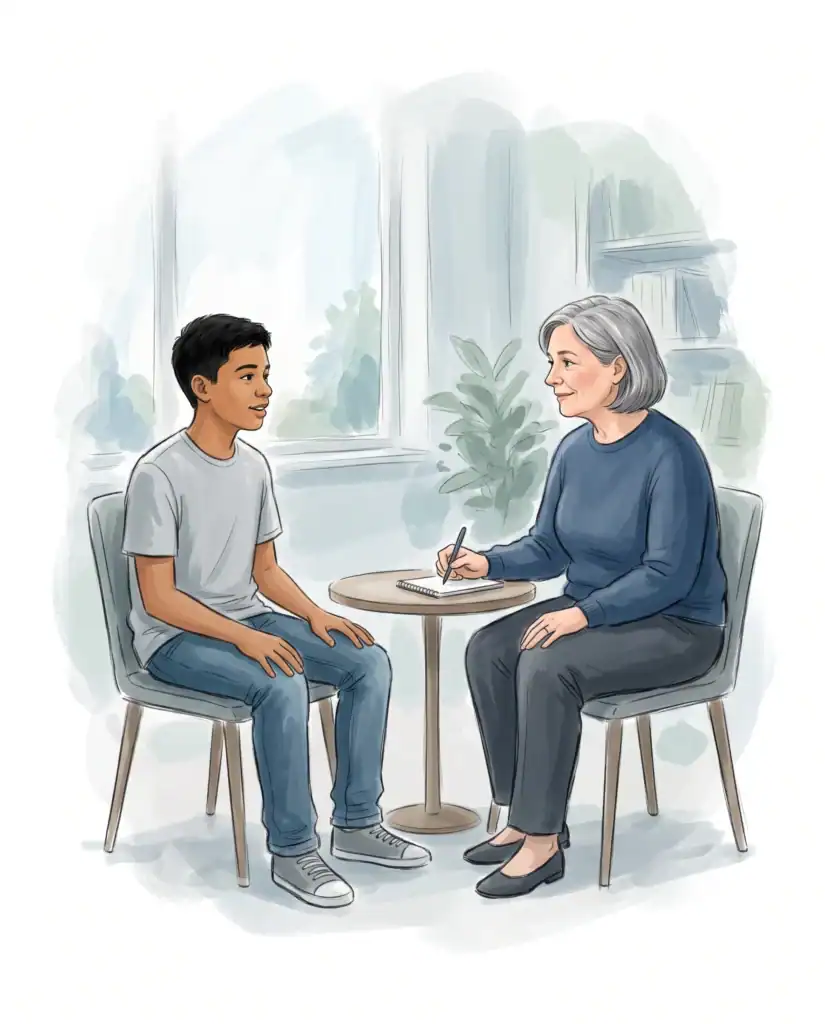
Many teens engage more in therapy when they have a real say in their goals and sessions focus on practical skills they can use at school and at home. Approaches our providers use include:
- Cognitive behavioral therapy (CBT) helps teens notice links between thoughts, feelings and actions, and practice new ways of responding.
- Acceptance and commitment therapy (ACT) helps teens make room for hard feelings while taking steps toward what matters to them.
- Dialectical behavior therapy (DBT) skills focus on mindfulness, tolerating distress, managing intense emotions and getting along with others.
Not every provider offers every approach, so ask intake which providers are trained in the approach you are interested in. Our guide to evidence-based psychotherapy modalities explains how each one works, and our CBT and ACT therapy page describes how sessions run. You can also ask whether a teen group is currently available.
When a psychiatric evaluation may help
Teen moods can shift quickly, which makes it hard to know when to ask for more help. A psychiatric evaluation may help when symptoms are severe, keep getting in the way despite therapy, or the diagnosis is unclear. If you are unsure, your teen’s pediatrician or a qualified provider can help you decide on next steps.
Psychiatry is available at Blue Sails. A licensed psychiatric provider, such as a psychiatric mental health nurse practitioner (PMHNP), reviews your teen’s symptoms and history and talks with your family about options. Medication may be considered alongside therapy based on an individualized psychiatric assessment, when clinically appropriate.
If medication becomes part of the plan, the prescriber will talk with you about possible benefits, side effects and follow-up. Please don’t start, stop or change a medication without talking with the prescriber. Read about psychiatric evaluations and medication management.
Talk of suicide, self-harm, or seeing or hearing things others don’t always deserves an immediate response. If you are in crisis, call 911, the nearest ER, or call or text 988.
Can a teen consent to therapy in Maryland?
A parent or guardian usually consents to health care for a minor. Maryland law includes an exception for mental health care. Under Maryland Health-General § 20-104, a minor who is 12 or older, and whom a licensed provider determines is mature and capable of giving informed consent, may consent to consultation, diagnosis and treatment of a mental or emotional disorder.
Limits families should know
- A teen can’t use this law to refuse care that a parent or guardian has already consented to.
- The law limits when a minor can consent on their own to prescription medication for a mental or emotional disorder.
- A provider may, but doesn’t have to, share information about the teen’s treatment with a parent or guardian, unless the provider believes sharing would harm the teen or keep them from seeking care.
This is general information, not legal advice, and laws can change. Our team can explain how consent and information sharing work at Blue Sails before care begins.
Staying involved while respecting your teen’s privacy

Private time with a provider helps many teens speak openly. You can still stay involved in ways that support their care:
- At the start, ask the provider to explain confidentiality and what kinds of updates you can expect
- Agree as a family on how and when updates are shared
- Help with the practical side, like scheduling, rides and regular attendance
- Ask open-ended questions about how therapy feels, without pressing for details
- Share what you notice at home through the channel you agreed on
Safety concerns can change what a provider needs to share, so revisit the plan as your teen’s needs change. Some families also add family sessions, and our couples and family counseling page explains how that works.
How to find the right provider for your teen

A few steps can make the search feel more manageable:
- Ask your teen’s pediatrician for a referral and share what you are noticing
- Check your insurance plan’s behavioral health benefits
- Ask about experience working with teens and with the concern you are seeing
- Ask how parents are involved and how progress is reviewed
- Ask whether sessions are in person, by telehealth or both
The American Academy of Child and Adolescent Psychiatry’s guide on where to find help for your child explains the types of professionals who work with teens. At Blue Sails, providers see teens in Lusby and Bethesda, and telehealth counseling is available anywhere in Maryland. Psychiatry is also available. If substance use is part of the picture, let intake know, and see our substance use and dual diagnosis guide.
School support: 504 plans and IEPs
School is often a big part of a teen’s plan. A Section 504 plan changes the learning environment, for example with extra time, breaks or a quiet testing space. An IEP under the Individuals with Disabilities Education Act provides special education services for students who qualify.
You can ask your teen’s school in writing for an evaluation. The school decides eligibility through its own process, so ask your school district about its steps and timelines. With your written permission, your teen’s provider can share helpful information with the school team.
When weekly therapy isn’t enough
Sometimes a teen needs more support than one session a week, for example when panic spikes between sessions or school avoidance keeps growing. Talk with your teen’s provider about options, which can include more frequent sessions or a higher level of care such as an intensive outpatient program. Our guide to intensive outpatient programs and levels of care explains how these options compare.
The Maryland Department of Health explains how 988 works in Maryland and lists urgent and acute behavioral health care options. Our crisis resources page has more.
If you are in crisis, call 911, the nearest ER, or call or text 988.
Blue Sails is not an emergency service. Outpatient appointments are for scheduled care.
Starting teen therapy at Blue Sails
- Call (410) 231-0488 or use our client intake form.
- Share your teen’s grade and what you are noticing at home and school. Keep detailed clinical history for the first appointment, not the form.
- Our team matches your teen with a provider and confirms benefits. Coverage varies by plan and service, so our team confirms benefits before care begins.
You can also return to our children and adolescents page, or see our page on support for elementary school children for younger kids.
Frequently asked questions
Ask our team about therapy and psychiatric support for your tween or teen.
How much does teen therapy cost, and do you take insurance?
Costs depend on your insurance plan and the service. Our team confirms your benefits and costs before care begins, so you know what to expect.
Can my teen attend therapy sessions by telehealth?
Yes. Blue Sails offers telehealth counseling anywhere in Maryland. Your teen will need a private, quiet space for sessions, and our team will talk with you about consent and whether telehealth is a good fit.
What happens during my teen’s first appointment?
The provider gets to know your teen and your family, asks about what is happening at home, at school and with friends, and talks about goals. Teens usually have some private time with the provider. You will talk about next steps together.
What should we do if my teen doesn’t click with their provider?
Tell us. Feeling comfortable with a provider matters, and our team can talk with you about trying a different provider.
How soon can my teen get an appointment with a provider?
Availability changes. Call us or use our client intake form, and our team will share the next available options, including telehealth.
Talk with us about support for your teen
Tell us what you are noticing at home and school. Therapy is available in Lusby, in Bethesda or by telehealth, and psychiatry is also available.
If you are in crisis, call 911, the nearest ER, or call or text 988.