

When a teen is struggling, home can start to feel like a battleground. Doors slam, conversations turn into arguments and parents are left wondering what to say. This guide shares practical ways families can support a struggling teen: staying calm so a teen can settle, validating feelings before solving problems, starting conversations without power struggles, setting shared limits and building steady routines. It is educational and not a substitute for an assessment. If your teen is in immediate danger, call 911, the nearest ER, or call or text 988.
Key Takeaways
- Pulling away and pushing back are common parts of the teen years, and they do not mean a teen does not need you.
- A parent’s steady voice and calm body can help a teen’s emotions settle, which is called co-regulation.
- Validating feelings first makes teens more open to problem-solving later.
- Predictable routines and enough sleep, which the CDC puts at 8 to 10 hours for teens, give a stressed teen more stability.
- Changes that last for weeks or affect school, friendships or safety are a reason to get professional support.
Why a Struggling Teen May Push You Away
Teens are working toward independence, so wanting more privacy and less advice is normal. When a teen is also anxious, low or overwhelmed, that push for distance can look like irritability, silence or arguments. Stress can make it harder for anyone to think clearly in the moment, and teens are still developing the skills to manage strong emotions. Seeing pushback as a sign of stress, not disrespect, can change how a parent responds.
Use Co-Regulation to Help Your Teen Settle

Co-regulation is the back-and-forth in which a caregiver’s calm, warm presence helps another person’s emotions settle. Harvard’s Center on the Developing Child describes responsive back-and-forth interactions as a building block of healthy development, and teens still benefit from that steadiness. In practice, that can look like:
- Lowering your voice and slowing down your speech.
- Keeping a neutral face and relaxed posture.
- Sitting side by side instead of standing over your teen.
- Taking a break when either of you is too upset to talk, and agreeing to come back to it.
Co-regulation starts with the parent. Taking a few slow breaths or stepping away for a moment before responding helps you bring calm into the room. For more on how co-regulation works across the family, see family systems therapy. For why teens can feel emotions before they can steady them, see the prefrontal cortex–amygdala gap. If your teen has shared an LGBTQIA+ identity, see family support for LGBTQIA+ youth and their parents.
Validate Feelings Before You Fix
Validation means letting your teen know their feelings make sense, even when you do not agree with their choices. It sounds like “That sounds really frustrating” or “I can see why you’re upset.” Jumping straight to advice can feel like dismissal, and a teen who feels dismissed often stops talking. Once a teen feels heard, they are usually more open to working on a solution together.
Start Conversations Without Power Struggles
Timing matters. Many teens talk more easily during a drive, a walk or while cooking than in a face-to-face sit-down. Avoid starting hard conversations when either of you is tired, hungry or already upset. Helpful habits include:
- Leading with what you have noticed rather than a label, such as “You’ve seemed really tired lately.”
- Asking open questions and listening more than talking.
- Offering real choices where you can, such as when or how something gets done.
- Letting small things go so the important limits carry more weight.
For more on talking with a teen who seems low or defensive, see teen depression vs. normal mood swings.
Set Limits Together on Screens, Sleep and Substances
Teens are more likely to follow limits they helped create. Sit down together to agree on a few clear expectations, such as phones charging outside the bedroom at night, a curfew and no alcohol or drug use, and the consequences if they are not followed. The American Academy of Pediatrics offers a family media plan that families can fill out together. Keep consequences calm, predictable and connected to the behavior.
Build Steady Routines
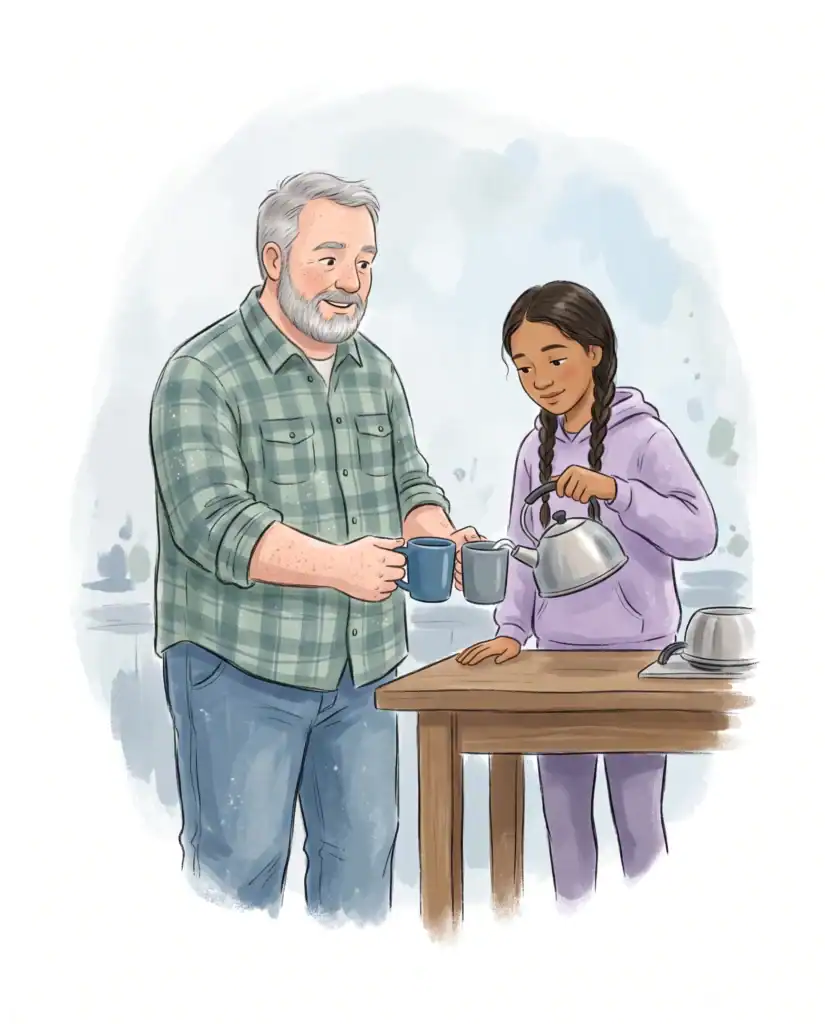
Predictable routines give a stressed teen something steady to hold onto. Regular mealtimes, a consistent wake time and some protected downtime can help. The CDC recommends 8 to 10 hours of sleep a night for teens ages 13 to 17 and suggests turning off devices at least 30 minutes before bed. Shared meals or a short evening check-in also create natural chances to connect without pressure.
Grow Your Teen’s Circle of Trusted Adults
Teens do not always want to talk to their parents, and that is okay. A relative, coach, teacher, school counselor or faith leader can offer another safe place to turn. Let your teen help choose who those people are, and let those adults know you are glad they are in your teen’s life.
When Your Teen Needs More Help

The National Institute of Mental Health offers guidance on warning signs in children and teens. Consider reaching out to a pediatrician or mental health provider if you notice changes that last more than a couple of weeks, such as:
- Ongoing sadness, irritability or worry.
- Pulling away from friends, family or activities they used to enjoy.
- Big changes in sleep, eating or energy.
- Falling grades or not wanting to go to school.
- Using alcohol or drugs.
If you are worried about your teen’s safety, do not wait. Call 911, the nearest ER, or call or text 988.
Helping a Teen Accept Therapy
Many teens resist the idea of therapy at first. Explain that it is a place to build skills, not a punishment. Give your teen a say in the process where you can, such as choosing a time or what to work on, and keep the first visit low-pressure: a chance to meet the provider, not to share everything at once. Parents can also get support for themselves, and parent sessions can help families practice these skills together. For the everyday pressures many teens face, see core adolescent mental health issues, and for school-related avoidance, see school refusal and academic anxiety.
Blue Sails offers therapy for tweens and teenagers in Maryland. Families can start with client intake.
For a broader overview of teen mental health, family communication and when to seek support, see the relationships, family and teens guide.
For a broader overview of children, teens and school mental health, and when to seek support, see the children, teens and school guide.
Frequently Asked Questions
What is co-regulation with a teenager?
Co-regulation is when a parent’s calm voice, relaxed body language and steady presence help a teen’s emotions settle. It often means slowing down, listening and taking a break before trying to solve a problem.
How do I talk to my teen without it turning into a fight?
Pick a calm moment, lead with what you have noticed rather than a label, ask open questions and listen more than you talk. Side-by-side moments, like a drive or a walk, often feel easier for teens.
Will my teen’s provider tell me what they say in therapy?
Providers usually explain how privacy works with both the teen and parents at the start of care, including when information would be shared, such as a safety concern. Ask about this at the first visit.
How much sleep does a teenager need?
The CDC recommends 8 to 10 hours of sleep a night for teens ages 13 to 17. A consistent wake time and devices off at least 30 minutes before bed can help.
Sources
Sources: Harvard Center on the Developing Child — Serve and Return, CDC — About Sleep, NIMH — Child and Adolescent Mental Health, American Academy of Pediatrics — Family Media Plan.