

When a child is struggling, it is natural to focus on that child. Family systems therapy takes a wider view: it looks at the household as a connected whole, where each person’s stress, habits and reactions affect everyone else. Instead of asking who “the problem” is, it asks which patterns keep a hard situation going, and what small changes could shift them.
This guide explains the core ideas behind family systems therapy, how co-regulation helps children borrow calm from the adults around them, and how these ideas apply to tantrums, teen outbursts, co-parenting, stepfamilies and special-needs households. It is educational and not a substitute for an assessment. For the wider picture of relationships and family support, see the relationships and family guide.
Key Takeaways
- Family systems therapy treats concerns as patterns in the whole household rather than problems that belong to one person.
- Co-regulation is how a caregiver’s steady, responsive presence helps a child’s nervous system settle, building toward self-regulation over time.
- Repair matters more than perfection: children benefit from adults who return to connection after hard moments.
- In blended and separated families, children do best when adults talk directly and children are kept out of the middle.
- Caregivers in special-needs households need support too; their wellbeing is part of the family’s care.
What Family Systems Therapy Means
Family systems therapy is a group of approaches that see individual struggles in the context of relationships. A provider looks at communication, roles, alliances and recurring responses across the family, and at how a change for one person ripples to others. Families often settle into familiar patterns, even unhelpful ones, because they feel predictable. Therapy helps make those patterns visible so the family can choose different responses.
Several models sit under this umbrella, including Bowen family systems theory, structural family therapy and strategic approaches. Providers vary in which they draw on, and a provider can explain how they work and why.
Family Systems Therapy vs. Internal Family Systems (IFS)
The names are similar, but the approaches are different. Family systems therapy focuses on relationships among family members and often includes several people in the room. Internal Family Systems (IFS) is usually an individual therapy that works with different “parts” inside one person. Someone could benefit from either, or both, depending on their goals.
The Patterns Families Inherit: Roles, Triangles and Boundaries

Bowen theory describes the family as an emotional unit. The Bowen Center outlines eight core concepts; a few of the most practical for families are:
- Differentiation of self: staying connected to family members while keeping your own calm judgment.
- Triangles: when tension between two people pulls in a third, often a child.
- Family projection: when a parent’s worries get focused onto a child.
- Multigenerational patterns: ways of coping that pass down through generations.
A family diagram, sometimes called a genogram, can map these patterns without blame. History gives context; it is not a life sentence. Common roles and the boundary shifts that can help include:
| Role | How it shows up | A boundary shift |
|---|---|---|
| Messenger | A child carries messages between parents | Adults talk directly with each other |
| Confidant | A parent shares adult worries with a child | Keep adult stress with adults |
| Outsider | One person is left out of decisions | Invite their voice and clarify roles |
| Caught in the middle | A child feels pressure to pick a side | Release the child from choosing |
Co-Regulation: How a Caregiver’s Calm Becomes a Child’s Calm
Young children cannot yet manage big feelings on their own. Co-regulation is the back-and-forth in which a caregiver’s warmth, tone and steady presence help a child’s body and emotions settle. Over many repetitions, children build the skills for self-regulation. Harvard’s Center on the Developing Child describes everyday “serve and return” interactions as a building block of healthy development.
In practice, co-regulation looks like noticing a child’s cues, naming what they seem to feel, keeping your voice and body calm, and offering comfort or structure that fits their age. It is not about telling a child to calm down; it is about lending them calm until they can find it themselves.
Repair Matters More Than Perfection
No parent stays calm all the time. Healthy caregiving includes many small misses and repairs. What helps is returning to connection after a hard moment: acknowledging what happened, taking responsibility for your part, and reconnecting. Helpful habits include:
- Responding to your child’s signals with calm words and reassurance.
- Repairing soon after a rupture, in words your child can understand.
- Reducing avoidable stress with predictable routines and enough sleep.
- Adjusting your pace when your child’s cues change.
When Adult Stress Spreads
Emotional openness runs in both directions. When caregivers are exhausted, anxious or depressed, children can pick up on that stress rather than on calm. That is one reason a caregiver’s own wellbeing is not a luxury; it is part of the child’s care. If you notice ongoing low mood or anxiety, support for yourself can help the whole household. Our guides on attachment styles and healthy relationships explore how adult patterns shape family life.
Co-Regulating During Toddler Tantrums
Toddlers are still learning words for big feelings, so frustration often comes out as tears or meltdowns. In the moment, it can help to:
- Make sure everyone is safe, and stay close while your child settles.
- Slow your breathing and use a quiet, steady voice.
- Keep words brief; big feelings make long explanations hard to absorb.
- Name the feeling without judgment, while keeping the limit.
- Offer connection, such as a hug, when your child is ready.
Holding a limit calmly, rather than giving in to end the tantrum, helps children learn that feelings are okay even when a behavior is not. For young children who seem to need more help, play therapy and parent coaching are options to ask about. The AAP’s HealthyChildren.org has more on communication and discipline.
Child and Teen Outbursts: Flexibility and Repair
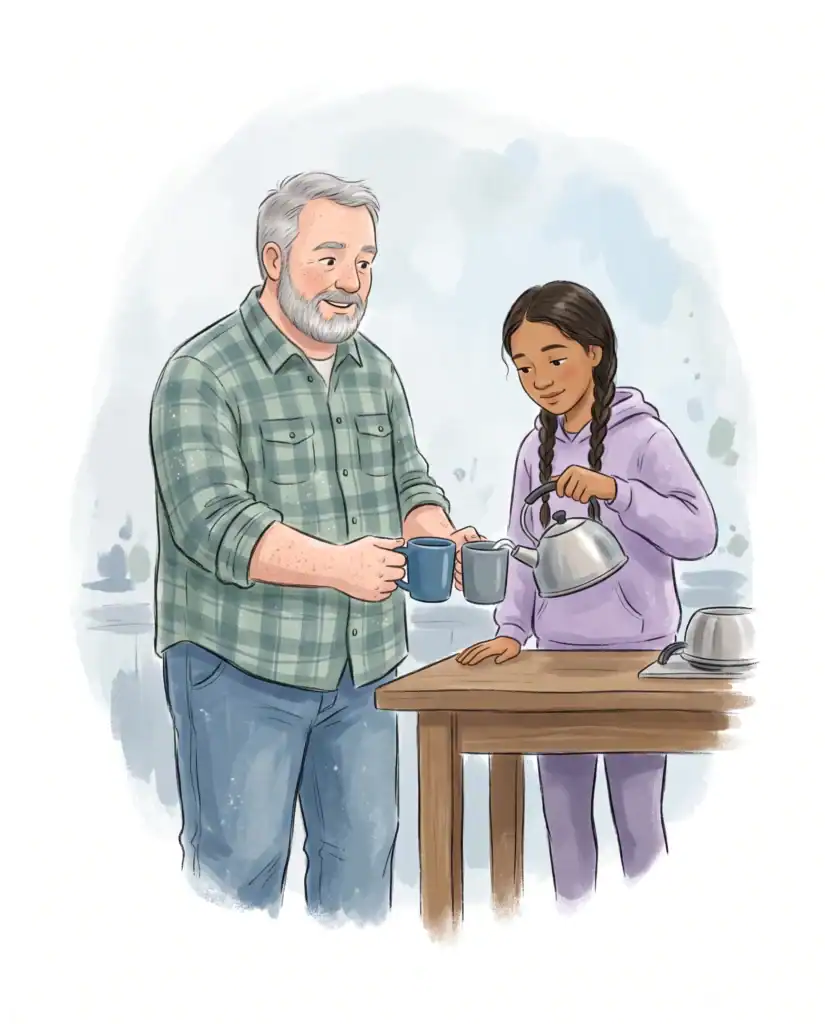
When a child or teen yells, slams doors or shuts down, it can look like defiance. Often it reflects emotion-regulation skills that are still developing. Flexibility, such as choosing different coping strategies for different situations, tends to grow with age and practice. Parents can help by staying calm, waiting until everyone has cooled down before problem-solving, and coming back later to talk about what happened and what could help next time. When outbursts are tied to school stress, school refusal and academic anxiety may be part of the picture.
Co-Parenting After Separation or Divorce
Separation changes a child’s world. What tends to help most is lower conflict and steady relationships, not a perfect schedule. Helpful principles include:
- Keep children out of disputes. Avoid arguing, criticizing the other parent or discussing legal matters where children can hear.
- Protect both relationships when it is safe. Warm bonds with each parent support adjustment.
- Explain changes together in honest, age-appropriate words.
- Build predictability with clear schedules, advance notice and consistent routines across homes.
- Fit arrangements to each child rather than to a formula.
When conflict stays high, family therapy or a parenting coordinator may help reduce how much of it children are exposed to. If there are safety concerns between parents, joint sessions may not be appropriate; see toxic relationships and safety planning.
Stepfamily Life Without the Power Struggles
Blending families brings new roles, routines and loyalties. Many families find that connection works best before control: stepparents build trust through warmth, patience and consistent care, while the biological parent often takes the lead on discipline early on, with the stepparent supporting limits the adults have agreed on together. Every family is different, and these roles can shift as relationships grow.
Children may feel that liking a stepparent betrays their other parent. Keeping children out of the middle, not speaking badly about the other parent, and allowing time all help. Families often blend gradually, and that pace is normal, not a sign of failure.
Family Therapy When a Child Has Special Needs

When a child has autism, ADHD, a medical condition or another special need, the whole household adjusts. Parents may take on new roles as schedulers and advocates, siblings may feel overlooked, and couples may have less time for each other. Family therapy does not treat the child as the problem; it helps the family see how it communicates, copes and shares the load so that responsibilities feel more sustainable.
Recognizing Caregiver Stress
Caregiver stress is common and is not a personal failing. Signs to watch for include ongoing anxiety or low mood, constant tiredness or poor sleep, guilt, physical strain, and pulling away from friends or your partner. These are worth raising with your own doctor or a mental health provider.
Coping Skills and Support Networks
Families often do best with a few clear, observable goals, such as smoother transitions or calmer evenings, and a simple plan for hard moments: reduce demands, offer a familiar calming option, and return to the activity when the child is ready. Visual supports, brief play built into routines, and tracking what helps can also make a difference. Progress is usually gradual.
Support outside the home matters too: parent groups, school teams, pediatricians and trusted friends or relatives. Respite, meaning short breaks from caregiving provided by others, can help caregivers rest; the ARCH National Respite Locator lists providers by state. For more on siblings and the couple relationship, see marriage after a neurodivergent diagnosis.
When to Consider Family Therapy
Family therapy may help when the same conflicts keep repeating, when a child’s behavior is affecting everyone at home, after a separation or remarriage, when caregiving stress is building, or when family members feel disconnected. It can also complement a child’s individual care. If someone is in danger, do not wait for a scheduled appointment: If you or someone you love is in crisis or thinking about self-harm, call 911, the nearest ER, or call or text 988.
Finding Support in Maryland
Blue Sails describes its couples and family work on the couples and family counseling page, and support for parents of autistic and neurodivergent children on the family counseling for parents raising neurodivergent children page. For children and teens, see child and adolescent mental health services. Coverage varies by plan; see insurance and costs. To start, use client intake.
Frequently Asked Questions
What is family systems therapy?
Family systems therapy is a group of approaches that view individual struggles in the context of family relationships. It looks at roles, communication and recurring patterns across the household rather than placing the problem on one person.
How is family systems therapy different from Internal Family Systems (IFS)?
Family systems therapy focuses on relationships among family members and often includes several people in sessions. Internal Family Systems (IFS) is usually an individual therapy that works with different “parts” within one person.
What is co-regulation?
Co-regulation is the back-and-forth in which a caregiver’s calm, warm and responsive presence helps a child’s emotions and body settle. Over time and with practice, it supports the child’s growing ability to self-regulate.
Can stepparents take part in family therapy?
Often, yes. Stepparents can be an important part of family sessions. Consent from a child’s legal guardian is usually needed when a minor is involved, so ask the provider how attendance and consent work before the first session.
Are teen sessions confidential from parents?
Confidentiality rules for minors depend on the situation and on state law. Providers usually explain at the start what will be shared with parents, such as general progress and safety concerns, and what stays private. Ask about this before sessions begin.
Sources
Sources: The Bowen Center — Core concepts, Harvard Center on the Developing Child — Serve and return, HealthyChildren.org (AAP) — Communication and discipline, ARCH National Respite Network — Respite locator.