
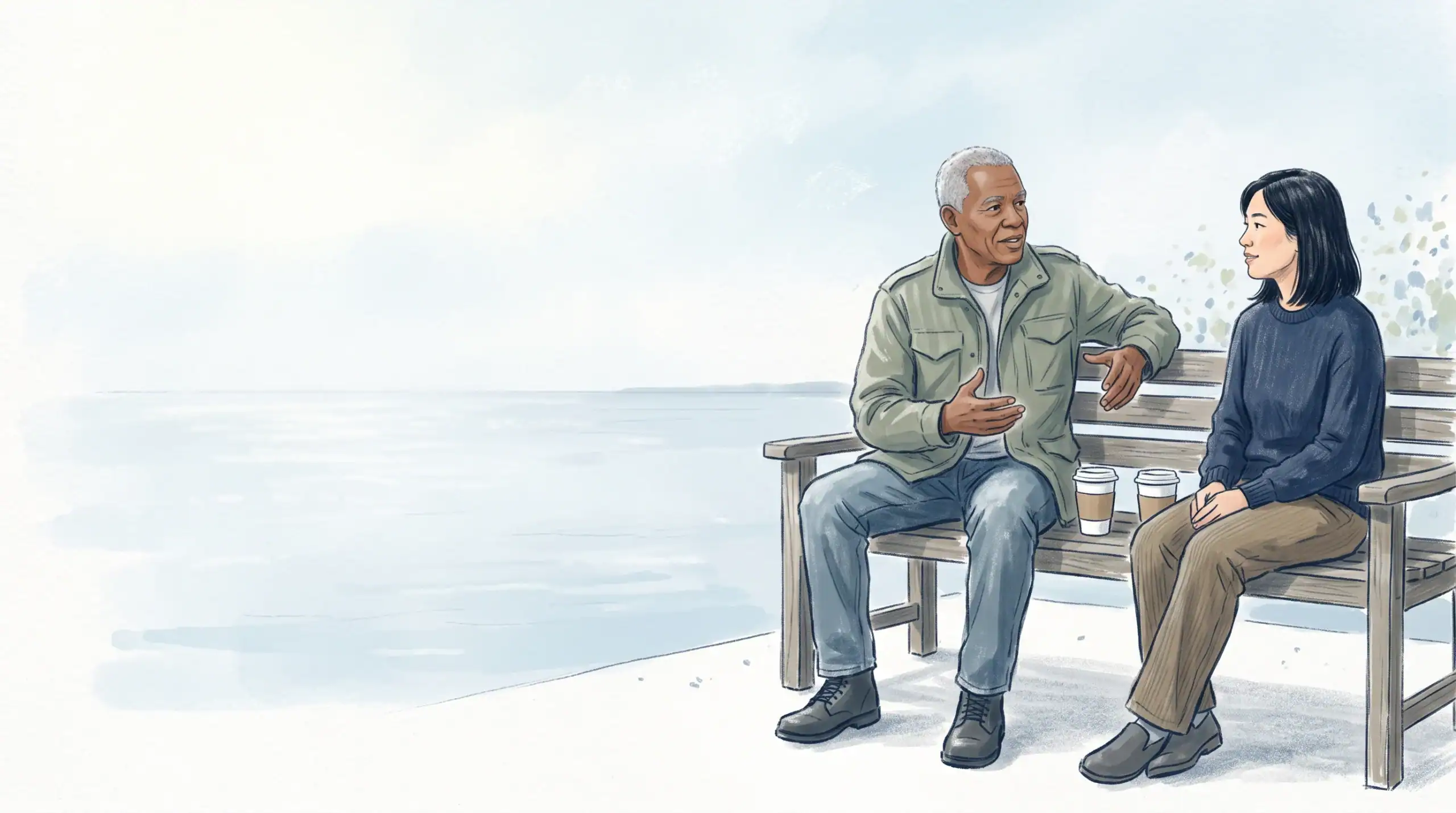
Self-care is often sold as a candle, a face mask or a weekend away. Those things can feel good, and rest matters. But when stress keeps returning, comfort on its own may not change much. Authentic self-care is the steadier work of noticing what you feel, treating yourself with kindness, protecting your time and energy, and living closer to what matters to you. This guide walks through each of those skills and explains when it may be time to look for more support. If you or someone you love is in crisis, call 911, the nearest ER, or call or text 988.
Key Takeaways
- The National Institute of Mental Health (NIMH) describes self-care as doing things that help you live well and improve both physical and mental health.
- Naming emotions accurately is a first step toward handling them.
- Self-compassion, as described by researcher Kristin Neff, has three parts: self-kindness, common humanity and mindfulness.
- Boundaries and values give self-care direction, so it fits your real life.
- Self-care supports treatment but does not replace it. Symptoms that last two weeks or more deserve a conversation with a provider.
Why Bubble-Bath Self-Care Can Fall Short
Comfort-based self-care is not wrong. A warm bath, a favorite show or a quiet evening can help the body settle. The problem comes when comfort is the only tool. If the same overload, conflict or self-criticism is waiting the next morning, the relief tends to fade quickly. Self-care that lasts usually includes some less glamorous steps: saying no, asking for help, adjusting expectations and getting enough sleep.
What Emotional Self-Care Actually Looks Like
NIMH lists practical self-care tips that are simple but often overlooked:
- regular exercise, even in small amounts;
- healthy, regular meals and enough water, with attention to how caffeine and alcohol affect your mood;
- a consistent sleep schedule, with less screen time before bed;
- relaxing activities such as music, reading or time in nature;
- setting goals and priorities, including saying “no” to new tasks when you are taking on too much;
- practicing gratitude and challenging unhelpful thoughts;
- staying connected with people who can offer support.
NIMH also notes that self-care looks different for everyone, and it may take some trial and error to find what helps.
Name It to Tame It: Building Emotional Literacy

It is hard to care for a feeling you cannot name. “Bad” or “stressed” can cover many different emotions, such as disappointment, worry, loneliness, resentment or grief. Each one may call for something different. A few ways to build emotional literacy:
- Pause a few times a day and ask, “What am I feeling right now?”
- Notice where the feeling shows up in your body, such as a tight jaw or heavy chest.
- Try to find a more specific word than “fine” or “upset.”
- Ask what the feeling might need: rest, connection, a boundary or a plan.
For simple grounding skills that pair well with this practice, see clinical mindfulness and nervous system regulation.
Quieting the Inner Critic
Many people are far harsher with themselves than they would ever be with a friend. The inner critic often sounds like it is trying to help (“If I go easy on myself, I will never get anything done”), but constant self-criticism can keep the stress response switched on. Noticing the critic’s voice, and asking whether you would say the same thing to someone you care about, is a useful first step. Perfectionism that drives this pattern is a common focus in therapy such as CBT and ACT.
Self-Compassion: The Three Components
Researcher Kristin Neff describes self-compassion as giving yourself the same kindness you would naturally offer a friend who is struggling. She describes three elements:
Self-Kindness Over Self-Judgment
Being warm and understanding when you make a mistake or feel inadequate, instead of ignoring the pain or attacking yourself. This does not mean lowering standards. It means changing because you care about yourself, not because you think you are unacceptable as you are.
Embracing Common Humanity

When things go wrong, it is easy to feel like the only person who struggles. Common humanity is the reminder that imperfection and hard times are part of being human, which can make difficult moments feel less isolating. If isolation has become a pattern, see social wellness and rebuilding connection.
Mindful Awareness, Not Overidentification
Mindfulness here means noticing painful thoughts and feelings without pushing them away or getting swept up in them. It helps keep a hard moment in perspective.
The Self-Compassion Break: A Short Self-Care Reset

This brief practice draws on the three components above and can be done almost anywhere:
- Name it. Say to yourself, “This is really hard right now.”
- Connect. Remind yourself, “Other people feel this way too. I am not alone.”
- Offer kindness. Ask, “What do I need right now?” and offer yourself a kind phrase or gesture, such as a hand on your chest.
If this practice brings up more distress than relief, stop and try an outward-focused activity instead, such as a short walk.
Boundaries as Self-Care
Boundaries are clear statements about what you can and cannot do. They protect your time, energy and relationships. NIMH’s self-care tips include learning to say “no” when you are taking on too much. Some examples:
- “I can help with this on Thursday, but not today.”
- “I am not available for work messages after 7 p.m.”
- “I want to talk about this, but not while I am this upset. Let’s try again tonight.”
Short, specific limits tend to invite less negotiation. Guilt often shows up when you start setting boundaries; that is common and usually eases with practice. If boundaries with a partner or family member lead to repeated conflict, couples and family counseling can help.
Values Alignment: Self-Care With Direction
Values are the qualities you want your life to stand for, such as honesty, connection, creativity or health. Acceptance and commitment therapy (ACT) uses values as a guide for action, even when difficult thoughts and feelings are present. A simple exercise:
- Write down three areas that matter to you, such as relationships, work and health.
- For each, name one value and one small action that would move you toward it this week.
- Notice where your current schedule pulls away from those values, and choose one change.
The APA’s guidance on building resilience also points to meaning and purpose, such as helping others and moving toward realistic goals, as a source of strength during hard times. For more on how ACT compares with other approaches, see CBT vs EMDR vs ACT.
Rest Without Guilt
Rest is not a reward you earn after everything is done. Sleep, short breaks and unscheduled time help the mind and body recover. If rest brings up guilt, try scheduling it like any other commitment, and remind yourself that recovery makes it easier to show up for the people and work you care about. For recovery after long stretches of stress, see building psychological resilience after chronic stress.
Common Obstacles to Sustaining Self-Care
Even with good intentions, self-care often slips. A few common obstacles and small ways around them:
- All-or-nothing plans. A big routine is hard to keep. Start with one small habit and build from there.
- Guilt about putting yourself first. Caring for yourself can leave more energy for the people you care about.
- Busy seasons. When time is short, shrink the habit instead of dropping it, such as a five-minute walk instead of a full workout.
- Self-criticism after a missed day. Treat a lapse as information, not failure, and restart the next day.
When to Seek Professional Support
Self-care can support mental health, but it is not a substitute for treatment. NIMH recommends seeking professional help for severe or distressing symptoms that have lasted two weeks or more, such as:
- difficulty sleeping, or changes in appetite or weight;
- difficulty getting out of bed because of mood;
- trouble concentrating or completing usual tasks;
- loss of interest in things you usually enjoy;
- irritability, frustration or restlessness.
A primary care clinician or mental health provider can help figure out next steps. If you or someone you love is in crisis, call 911, the nearest ER, or call or text 988.
Getting Support at Blue Sails
Blue Sails offers outpatient therapy in Maryland, including CBT and ACT therapy for anxiety and depression and individual psychotherapy. Therapy is available by telehealth across Maryland. To begin, start with client intake.
For an overview of anxiety, stress and burnout, and when an evaluation may help, see the anxiety guide.
Frequently Asked Questions
What is authentic self-care?
Authentic self-care goes beyond comfort activities. It includes noticing and naming emotions, treating yourself with kindness, setting boundaries, getting enough rest and making choices that fit your values.
Is self-compassion the same as self-esteem?
No. Self-esteem often depends on succeeding or comparing well with others. Self-compassion means treating yourself kindly whether things are going well or not.
How do I set boundaries without feeling guilty?
Start with short, specific statements about what you can and cannot do. Guilt is common at first and usually eases with practice. If boundaries lead to repeated conflict, a provider can help.
How long does it take for self-compassion practice to help?
Progress varies from person to person. Consistent, repeated practice tends to help more than brief attempts.
Can I get therapy for self-care and boundaries by telehealth in Maryland?
Yes. Blue Sails offers therapy by telehealth across Maryland, and providers can work on skills like self-compassion, boundaries and values within therapy.
Sources
Sources: NIMH — Caring for Your Mental Health, Kristin Neff — What Is Self-Compassion?, American Psychological Association — Building Your Resilience.