
Between 18 and 24 months, many parents start to wonder whether their toddler’s development is on track. Early signs of autism at this age usually show up in how a child connects with people: whether they respond to their name, point to share something interesting, look back at you to share a moment, and use words and gestures to communicate. Noticing a difference is a reason to gather information and talk with your child’s doctor, not a reason to panic. This guide walks through the milestones to watch, the signs that are worth raising, how to keep a simple observation log, and what screening and evaluation involve. It is general education, not a diagnosis, and it does not replace a conversation with your child’s pediatrician. If you are worried about your child’s immediate safety, call 911 or go to the nearest ER. If you are in crisis yourself, call or text 988.
Key takeaways
- By 18 months, most children point to show you something interesting, and by 2 years most notice when others are hurt or upset and say at least two words together (CDC).
- Signs worth discussing include limited response to name, few gestures, little shared attention, repetitive play or movements, and strong reactions to sounds or textures. One sign on its own does not mean a child is autistic.
- Losing words, gestures or social skills a child already had is worth raising with your child’s doctor promptly, at any age.
- The American Academy of Pediatrics recommends autism-specific screening at the 18- and 24-month well-child visits. Screening shows whether an evaluation may help; it does not diagnose autism.
- In Maryland, children under 3 may be eligible for the Infants and Toddlers Program based on developmental concerns. An autism diagnosis is not required to refer.
Early signs of autism at 18–24 months
The CDC describes developmental milestones as things most children (75% or more) can do by a certain age. By 18 months, most children point to show you something interesting, look at a few pages of a book with you, try to say three or more words besides “mama” or “dada,” and play with toys in a simple way, like pushing a toy car (CDC milestones by 18 months). By 2 years, most notice when others are hurt or upset, look at your face to see how to react in a new situation, point to things in a book when you ask, and say at least two words together, like “more milk” (CDC milestones by 2 years).
The CDC also lists examples of social-communication differences linked with autism, including not pointing to show something interesting by 18 months and not noticing when others are hurt or upset by 24 months. Its list of restricted or repetitive behaviors includes lining up toys and getting upset when the order changes, repeating words or phrases (echolalia), playing with toys the same way every time, focusing on parts of objects such as wheels, getting upset by minor changes, and unusual reactions to the way things sound, smell, taste, look or feel (CDC signs and symptoms). The same page notes that some children without autism show some of these behaviors, and autistic children may not show all or any of them.
That is why clinicians look for a pattern across settings and over time rather than any single behavior. For a broader overview of signs at every age, screening and Maryland referral routes, see our guide to early signs of autism and early intervention.
Loss of skills: when to call the doctor promptly
Sometimes a toddler stops using words, gestures or social skills they had been using regularly. A child who used to wave, say a handful of words or bring you toys to look at may seem to stop. The CDC’s milestone checklists ask parents directly whether their child has lost any skills, and advise talking with the child’s doctor and asking about developmental screening if they have. Loss of skills does not tell you the cause, and it does not mean a child is autistic. It is a reason to call rather than wait for the next routine visit.
How to document a change for the doctor
A change at home may not show up in a short exam, so specific notes help. Write down:
- Which skill changed: words, gestures, pointing, play, eye contact or self-care.
- When you first saw the skill, when you last saw it regularly, and when you noticed it fading.
- Whether the change was gradual or sudden, with a concrete example, such as the word your child used to ask for juice.
- Anything else that changed around the same time, such as illness, sleep or a big move, and skills that stayed the same.
- Short, dated videos of the skill, if you happen to have them.
Not responding to name
Most babies begin turning toward a caregiver’s voice in the first year, and the CDC lists not responding to name by 9 months among its examples of autism-related differences. At 18 to 24 months, notice whether your child turns, pauses or looks up when you call their name during calm, ordinary moments, not only when they are deeply absorbed in play or tired. Some autistic children do respond to their name, and some children who don’t respond have other explanations, including hearing problems. Ask your pediatrician about a hearing check, and share what you see across several days and settings.
Pointing, eye contact, and sharing attention
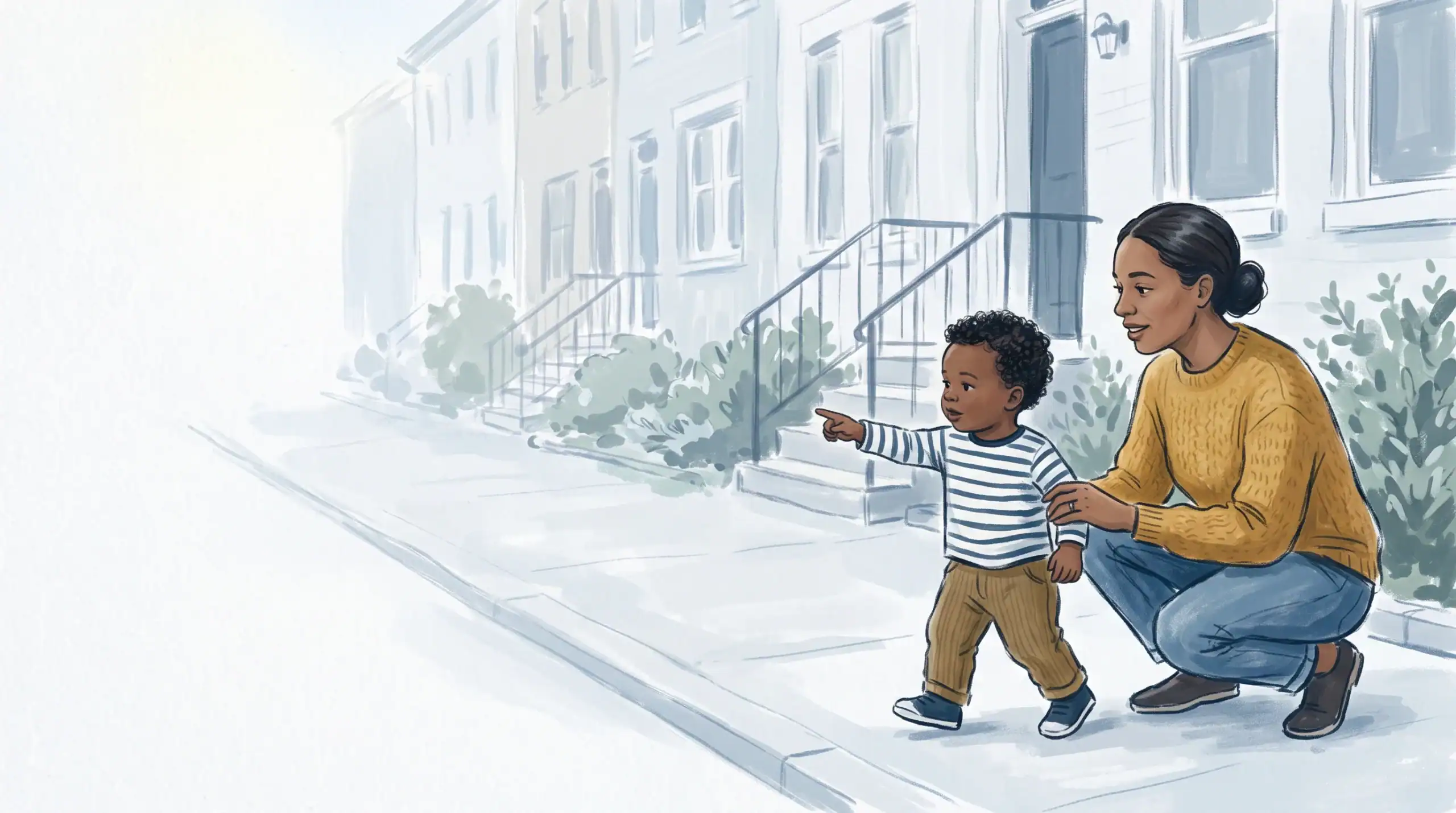
Picture a toddler who points at a dog, looks at you to check that you saw it too, then looks back at the dog. That back-and-forth is called joint attention: sharing focus on something with another person. Clinicians pay attention to it because it is part of social communication.
Parents can notice a few things. Does your child point to show you something, or only to ask for something they want? Do they follow your point or gaze when you say “look”? Do they pair eye contact with gestures, smiles or sounds? Some children lead an adult by the hand or point without looking back to share the moment. On its own, that is one observation, not a diagnosis. If you see it often, write down examples and bring them to the 18- or 24-month visit.

How many words should a toddler say by 24 months?
Language develops across a range of ages. The CDC’s checklist for 2 years includes saying at least two words together. The American Speech-Language-Hearing Association (ASHA) notes that a widely used set of criteria for late language emergence is fewer than 50 words and no two-word combinations by 24 months, and that these criteria should be reviewed over time (ASHA). A late talker is not necessarily autistic, and many children who talk late have no other differences. If your child is late to talk and you’re not sure whether it’s a speech delay or a sign of autism, our guide to toddler speech delay vs. autism walks through the joint-attention signs clinicians check first.
When you count words, count words your child uses with meaning and fairly consistently, including words in every language your family speaks and close word approximations. Listen for two-word phrases your child puts together on their own, such as “more water” or “go outside,” rather than memorized lines. Language differences are more of a concern when they appear alongside few gestures or little shared attention. A speech and language evaluation can help, and our speech and language therapy team works with young children and their families.

Echolalia and imitation
Many toddlers repeat words and phrases they hear from a parent, a sibling or a favorite show. Repeating words or phrases over and over is called echolalia, and the CDC lists it among behaviors that can be related to autism. Repetition is also a normal part of learning to talk, so purpose and context matter. Helpful things to notice:
- Whether repeated words seem to serve a purpose, like asking for something, commenting or connecting with you.
- Whether your child copies gestures, facial expressions or simple actions on their own, only when prompted, or rarely.
- Whether repeated phrases are most of what your child says as they approach 2.
Lining up toys vs. pretend and functional play
Lots of toddlers line up blocks or cars. Lining up toys alone does not signal autism. It becomes more notable when it is persistent, when interrupting it causes intense distress, or when it crowds out other kinds of play.
| Type of play | What it looks like | What to note |
|---|---|---|
| Functional play | Rolling a car, stacking blocks, stirring with a spoon | Using toys the way they are designed to be used |
| Pretend play | Feeding a doll, talking on a toy phone | Simple imagined actions, which the CDC encourages at this age |
| Arranging | Cars lined up in a row, the same order every time | How often it happens and how your child reacts when the order changes |
Encouraging flexible play at home
- Join first, then add one small change. Copy the lineup, then drive one car through it and pause.
- Model simple pretend play, like feeding a stuffed animal and saying “baby eats,” without requiring your child to copy you.
- Take turns rolling a ball or pushing cars, and wait so your child can start the next turn.
If you’d like coaching on routines and play at home, our parent coaching and training service works with families of young children.
Repetitive behaviors: movements, routines, interests
Restricted and repetitive behaviors are one of the two areas clinicians look at when evaluating for autism, alongside social communication. The CDC’s examples include flapping hands, rocking or spinning, getting upset by minor changes, needing to follow certain routines, and very intense interests. Many toddlers show some of these at times, so note what happens, how often, and in what setting, and share examples with your pediatrician.
Sensory seeking, sensory avoidance, or autism?
The CDC includes unusual reactions to sounds, smells, tastes, sights or textures among its examples, and sensory differences can be part of an autism evaluation. Sensory differences also happen in children who are not autistic, so they cannot identify autism on their own.
- Seeking: spinning, jumping, crashing into cushions or chewing non-food objects for extra movement, sound or touch.
- Avoiding: covering ears, leaving noisy rooms, or refusing certain textures, clothes or foods.
- Mixed: seeking some sensations while seeming not to notice others.
Note the trigger, how often it happens, how long it takes your child to settle, and how it affects play, meals and sleep. Our occupational and sensory therapy page explains how occupational therapy can support sensory regulation and daily routines.
One missed milestone vs. a pattern
Because milestones describe what most children (75% or more) can do by a given age, a single missed milestone has many possible explanations, and meeting milestones does not rule autism out. The CDC’s advice is simple: if your child is not meeting one or more milestones, has lost skills, or you have other concerns, talk with your child’s doctor and ask about developmental screening. What usually prompts a closer look is a pattern, such as differences in social communication together with repetitive behaviors, seen across settings and over time.
How to keep an autism observation log at home
A simple log turns a general worry into specific information your child’s care team can use. You don’t need special training. Pick a format you will keep using, such as a notebook, a notes app or a simple table, and use the same few fields each time.
- Date, time and activity: for example, “Tuesday, after lunch, playing with blocks.”
- What you saw: describe the behavior plainly, without labels. “Called his name three times from across the room; he looked up once” is more useful than “ignores me.”
- Where and with whom: at home, childcare or a playgroup; with you, a grandparent or other children.
- How often: consistent, occasional, or not seen.
- Strengths: favorite activities, new words and gestures, and what helps your child calm down.
- Changes: any skill that seems to have faded, with dates.
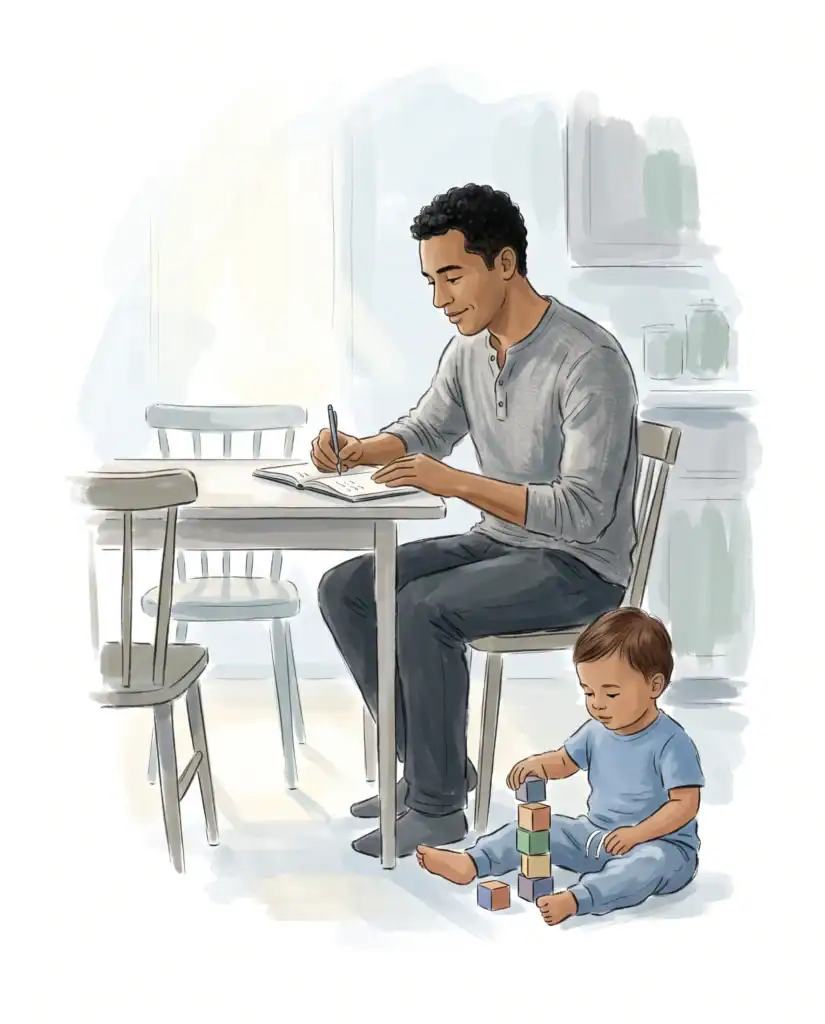
Childcare providers and family members can add what they see, too. Treat the log as a way to communicate with your child’s doctor, not a diagnostic tool, and bring it to the 18- and 24-month visits.
The 18- and 24-month M-CHAT-R/F autism screen
The American Academy of Pediatrics recommends autism-specific screening at the 18- and 24-month well-child visits, along with ongoing developmental monitoring (AAP). A common tool is the M-CHAT-R/F, a parent questionnaire for toddlers about 16 to 30 months old, with a follow-up interview when needed. Your child’s pediatrician usually gives it as part of the well-child visit.
| M-CHAT-R total | What the authors’ scoring guide says |
|---|---|
| 0–2 | Lower likelihood. If your child is younger than 24 months, screen again at 2 years. |
| 3–7 | Complete the follow-up interview. The screen is positive if two or more items still show elevated likelihood. |
| 8–20 | Positive screen. The follow-up interview can be skipped and referral should happen right away. |
Source: M-CHAT-R/F scoring guide. A positive screen does not confirm autism, and a lower result does not rule it out if you remain concerned. Some girls with subtle traits may not stand out on screening questionnaires; our guide explains how autism presents differently in girls.
What happens after a positive autism screen
A positive screen means a closer look is recommended. For a positive screen, the M-CHAT-R/F scoring guide calls for referral to early intervention and a diagnostic evaluation at the same time, so one doesn’t have to wait for the other. Our guide to understanding your child’s M-CHAT-R score explains each score range and the Follow-Up interview in more detail.
- Ask your pediatrician which referrals they are making and what you should do next.
- In Maryland, you can refer a child under 3 to the Infants and Toddlers Program yourself, through the statewide online referral site or by calling 1-800-535-0182. Evaluations and services are free to families and need your consent.
- A diagnostic autism evaluation is a separate process. Your child’s doctor or insurance plan may have their own referral requirements.
- Keep a copy of the screening result and your observation log for each appointment.
If you feel your concerns are not being heard, it is reasonable to ask for a repeat screen or a second opinion.
When to request an autism evaluation
You don’t have to wait for a positive screen. If you or your child’s doctor are concerned, you can ask for a diagnostic evaluation by a clinician experienced in autism. A diagnostic evaluation looks at development, communication, social interaction, play, behavior and sensory responses. It usually combines a caregiver interview, developmental history and direct observation. Structured observation tools such as the ADOS-2 can be part of an evaluation, but no single test makes the diagnosis; the evaluator applies DSM-5-TR criteria and considers other conditions that can look similar. Blue Sails offers autism evaluations and diagnosis, and our team can talk through clinical fit and what your insurance requires.
Early intervention doesn’t wait for a diagnosis
The American Academy of Pediatrics advises referring a child for intervention as soon as a developmental delay is identified, without waiting for an autism evaluation to take place. Under Part C of the Individuals with Disabilities Education Act (IDEA), each state runs an early intervention program for children from birth to age 3. In Maryland, that is the Infants and Toddlers Program, run locally in each county. A child under 3 may be eligible with a 25% delay in one or more areas of development, atypical development or behavior that is likely to lead to a delay, or a diagnosed condition with a high probability of causing a delay. If your child is eligible, an Individualized Family Service Plan (IFSP) sets out supports, often built into your family’s everyday routines.
Blue Sails offers an early-intervention autism program for children ages 2 to 6, along with autism services for young children and their families. You can also read about our care for toddlers and preschoolers and our support for parents of neurodivergent children. Coverage varies by plan, service and provider, so see insurance and costs or request an appointment and our team can check your benefits.
Frequently asked questions
How is autism different from a speech or language delay alone?
A speech or language delay affects how a child understands or uses language. Autism involves differences in social communication, such as joint attention, gestures and pointing to share interest, together with restricted or repetitive behaviors. A child can have both, and a speech and language evaluation plus a hearing check are often part of sorting out the picture.
Should younger siblings of an autistic child be watched more closely?
The National Institute of Mental Health lists having a sibling with autism among the factors associated with an increased likelihood of autism, while noting that not everyone with these factors develops it (NIMH). Tell your child’s pediatrician about the family history so they can monitor development closely, and ask about an evaluation whenever you have concerns rather than waiting for a scheduled screen.
Does a positive M-CHAT mean my child has autism?
No. The M-CHAT-R/F is a screening questionnaire. A positive result means an evaluation and early intervention referral are recommended. Only a diagnostic evaluation can determine whether a child is autistic.
Does insurance cover an autism evaluation for a toddler?
Coverage varies by plan, service and provider, and some plans require a referral or prior authorization. Before an evaluation, ask our team to check your benefits, or see insurance and costs. Maryland Infants and Toddlers Program evaluations and services are free to families.
How long does an autism evaluation take?
It depends on your child and on what the evaluation includes. Some evaluations happen over more than one visit. Ask about appointment length and scheduling when you book, so you can plan around naps and meals.