
Autism services · Occupational and sensory therapy
Pediatric occupational and sensory integration therapy in Southern Maryland
When getting dressed, trying new foods, holding a crayon or coping with a noisy room is a daily struggle, it can be hard to know where to start. Pediatric occupational therapy (OT) looks at the everyday activities your child needs and wants to do, and at what gets in the way. This guide explains OT and sensory integration, what an evaluation looks at, and how to ask about next steps. Sensory differences also sit inside a wider picture; see the guide to autism, sensory processing, and neurodiversity.
Prefer to talk? Call (410) 231-0488

Key takeaways
-
OT is about daily life
Occupational therapy focuses on the everyday activities a child needs and wants to do, such as play, self-care and school tasks.
-
Sensory differences are common
Some children seek extra movement or touch, some are overwhelmed by sound or texture, and many show a mix of both.
-
The research is mixed
Studies of sensory integration therapy for autistic children have reached different conclusions, so clear, measurable goals matter.
-
Routines are practice time
Dressing, meals, play and bedtime give children many chances to practice skills between sessions.
-
A diagnosis isn’t required to ask
You can raise concerns about motor, sensory or self-care skills with your child’s doctor whether or not autism is part of the picture.
Occupational and sensory therapy is one of the areas listed on our autism services hub. OT must be provided by a licensed occupational therapist, so before you plan around it, ask our intake team whether it is currently available, who would provide it and what their credentials are.
What pediatric occupational therapy is
The American Occupational Therapy Association (AOTA) describes occupational therapy as using everyday life activities, called occupations, to support health, well-being and participation. For a child, those occupations are things like playing, getting dressed, eating, using the bathroom, learning at school and joining in with family routines.
According to AOTA, OT services typically include:
- An evaluation that builds an occupational profile of your child’s history, routines, interests and what matters to your family.
- An individualized intervention plan aimed at the daily activities and goals you set together.
- A review of outcomes to check whether those goals are being met and adjust the plan.
AOTA also lists caregiver and family training among the things OT can offer, which is why parents are usually closely involved.
Sensory processing and sensory integration, explained
Sensory processing is how the brain takes in and organizes information from the senses. Beyond sight, hearing, touch, taste and smell, it includes the vestibular sense (balance and movement), proprioception (body position and muscle pressure) and interoception (signals from inside the body, like hunger or needing the bathroom). For parents sorting ADHD vs anxiety vs sensory overload in children, sensory triggers and timing are key clues.
Sensory integration therapy, often associated with the work of A. Jean Ayres, uses play-based, movement-rich activities that a trained occupational therapist adjusts to a child’s responses. It is one of several approaches an OT may use.
Seeking, avoiding or a mix
- Seeking: a child may crave movement, crash into furniture, chew on clothing or seem constantly on the go.
- Avoiding or over-responsive: a child may cover their ears, refuse certain clothes or textures, or become upset in busy places.
- Under-responsive: a child may not seem to notice their name, messy hands or bumps and scrapes.
- Mixed: many children seek some kinds of input and avoid others, and patterns can shift with tiredness or stress.
A meltdown in a loud store or a refusal to wear socks can look like defiance. Sometimes it is a child’s response to input that feels overwhelming. Noticing when these moments happen is a useful first step to share with your child’s doctor or an evaluator.
What the research says about sensory integration
Families often hear strong claims in both directions, so it helps to know what larger studies have found:
- A 2024 systematic review in the journal Children (Camino-Alarcón and colleagues) looked at 16 studies from 2013 to 2023 and concluded that sensory integration intervention for children with autism met criteria to be considered an evidence-based practice. The authors noted that most studies took place in clinical settings and called for more research in homes and schools.
- The SenITA randomized controlled trial, published in 2022 by the UK’s National Institute for Health and Care Research, compared manualized sensory integration therapy with usual care in 138 autistic primary-school children. It found no significant difference in irritability or agitation at six months and no meaningful effects on other measured outcomes at 6 or 12 months, although carer-rated progress on individual goals increased during therapy.
Taken together, the evidence is still developing. Ask any clinician which approach they recommend for your child, what specific goals it targets and how progress will be measured and reviewed with you.
How play in OT builds fine motor skills

Fine motor skills are the small hand movements behind tasks like holding a crayon, using scissors, opening containers and fastening buttons. In OT, these skills are usually practiced through play a child enjoys, so practice feels like a game rather than a drill.
- Threading large beads or pasta onto a cord.
- Squeezing, rolling and pinching play dough.
- Picking up small toys with tongs or clothespins.
- Drawing, coloring and tearing paper for collages.
- Building with blocks or interlocking toys.
These activities offer chances to practice grasp, hand strength and coordination. Your child’s therapist can suggest which ones fit your child’s current skills and interests.
Dressing, utensils and toileting
Dressing skills development
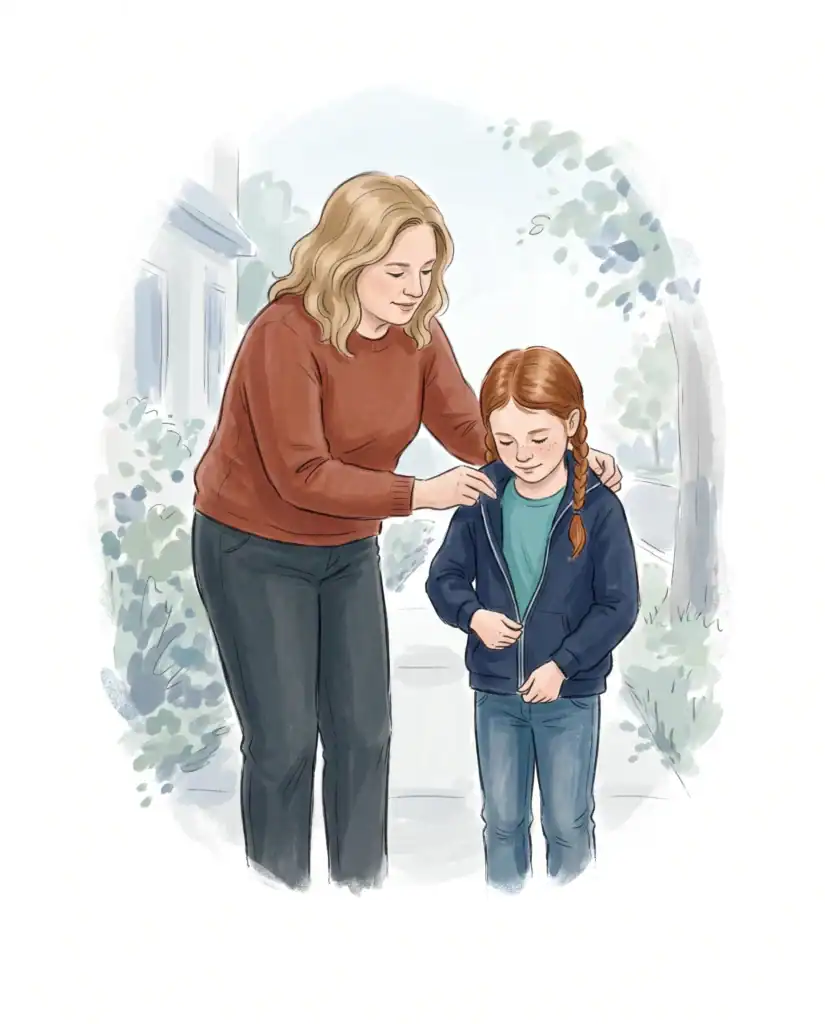
Dressing combines balance, body awareness, hand skills and sequencing. OTs often break dressing into small steps and let a child finish the last step independently, then add earlier steps as skills grow. Loose clothing, elastic waistbands, larger buttons and a zipper pull can make early practice easier.
Utensils and mealtime skills
Using a spoon or fork depends on grasp, wrist control and steady seating. Feet supported on a stool, chunkier handles and plenty of time can help a child focus on the skill itself.
Toileting
Toileting draws on interoception (noticing body signals), clothing management and routine. Visual schedules, predictable timing and a calm, low-pressure approach are common supports. If your child has pain, withholding or other medical concerns, talk with your pediatrician first. Families often ask how sensory needs show up at home, so we also walk through toilet training, feeding and sensory routines in our autism program.
The CDC’s milestone checklists describe what most children do at each age, including self-care. If you’re concerned your child isn’t meeting milestones or has lost skills, talk with your child’s doctor.
Picky eating or a feeding concern?
Many young children go through phases of picky eating. It may be worth a closer look if your child:
- Eats a very small number of foods, or the list keeps shrinking.
- Gags, coughs or becomes very distressed with new textures.
- Has trouble chewing or moving food around in the mouth.
- Has weight, growth or nutrition concerns raised by a doctor.
- Has mealtimes that are consistently stressful for the whole family.
Feeding difficulties can involve medical, oral-motor, sensory and behavioral factors, so your pediatrician is a good first call. Feeding support may come from an occupational therapist or a speech-language pathologist with feeding training, sometimes working alongside a dietitian or medical specialist.
Home sensory strategies to discuss with your child’s team

Small changes at home can make daily routines more predictable. These are ideas to talk through with your child’s clinician, who can help tailor them:
- Track patterns: jot down when hard moments happen, what came before and what helped.
- Give warnings before transitions: a timer or a picture schedule can show what comes next.
- Build in movement: short breaks for jumping, carrying or outdoor play can fit into the day.
- Create a calm spot: a quiet corner with soft lighting and a favorite book can offer a place to reset.
- Adjust the environment: softer clothing, quieter mealtimes or headphones in loud places may help some children.
What helps one child may not help another, so try one change at a time and share what you notice.
How to get started
- Talk with your child’s doctor. Share your notes and ask about developmental screening and whether an OT evaluation makes sense.
- Under age 3? The Maryland Infants and Toddlers Program evaluates young children with developmental concerns, and early intervention services through the program are provided at no cost to families. You don’t need a diagnosis to ask for an evaluation.
- School age? If motor or sensory needs affect learning, you can ask your child’s school about an evaluation. OT can be a related service in an IEP when a child qualifies.
- Check your coverage. OT coverage, referral and authorization rules vary by plan, so call your plan and see our insurance and billing page.
- If autism is a question, a comprehensive autism evaluation can help clarify the bigger picture.
Many children receive more than one kind of support. Our pages on pediatric speech-language therapy, the early-intervention autism program, play and expressive therapy and support for toddlers and preschoolers explain other options. With your consent, providers can share goals so your child practices the same skills across settings.
Frequently asked questions
Ask intake about your child’s needs, coverage and current availability.
Does my child need an autism diagnosis to start occupational therapy?
No. An OT evaluation looks at how your child manages everyday activities such as play, self-care and school tasks, with or without an autism diagnosis. Some insurance plans have their own referral or diagnosis requirements, so check with your plan.
What is the difference between occupational therapy and sensory integration therapy?
Occupational therapy is a broad field focused on everyday activities. Sensory integration therapy is one approach an occupational therapist may use, built around play-based activities that are adjusted to how a child responds to sensory input.
Is occupational therapy available at Blue Sails?
Occupational and sensory therapy is listed among Blue Sails autism services. Availability can change, so call our intake team at (410) 231-0488 to ask whether it is currently offered, who would provide it and their credentials.
Can occupational therapy work alongside speech therapy or ABA?
Yes. Many children receive more than one kind of support. When several providers are involved, sharing goals with your consent helps your child practice the same skills at home, in therapy and at school.
Is pediatric occupational therapy covered by insurance?
Coverage depends on your plan. Some plans require a referral, prior authorization or a set number of visits, so call your plan to ask. Early intervention services through the Maryland Infants and Toddlers Program are provided at no cost to families. See insurance and billing.
Talk through the next step
Share what you’re noticing about your child’s play, self-care or sensory needs, and ask about autism services, evaluations and coverage. Blue Sails has offices in Bethesda and Lusby, with telehealth across Maryland.
If you or your child are in crisis, contact 911, the nearest ER, or call or text 988.