
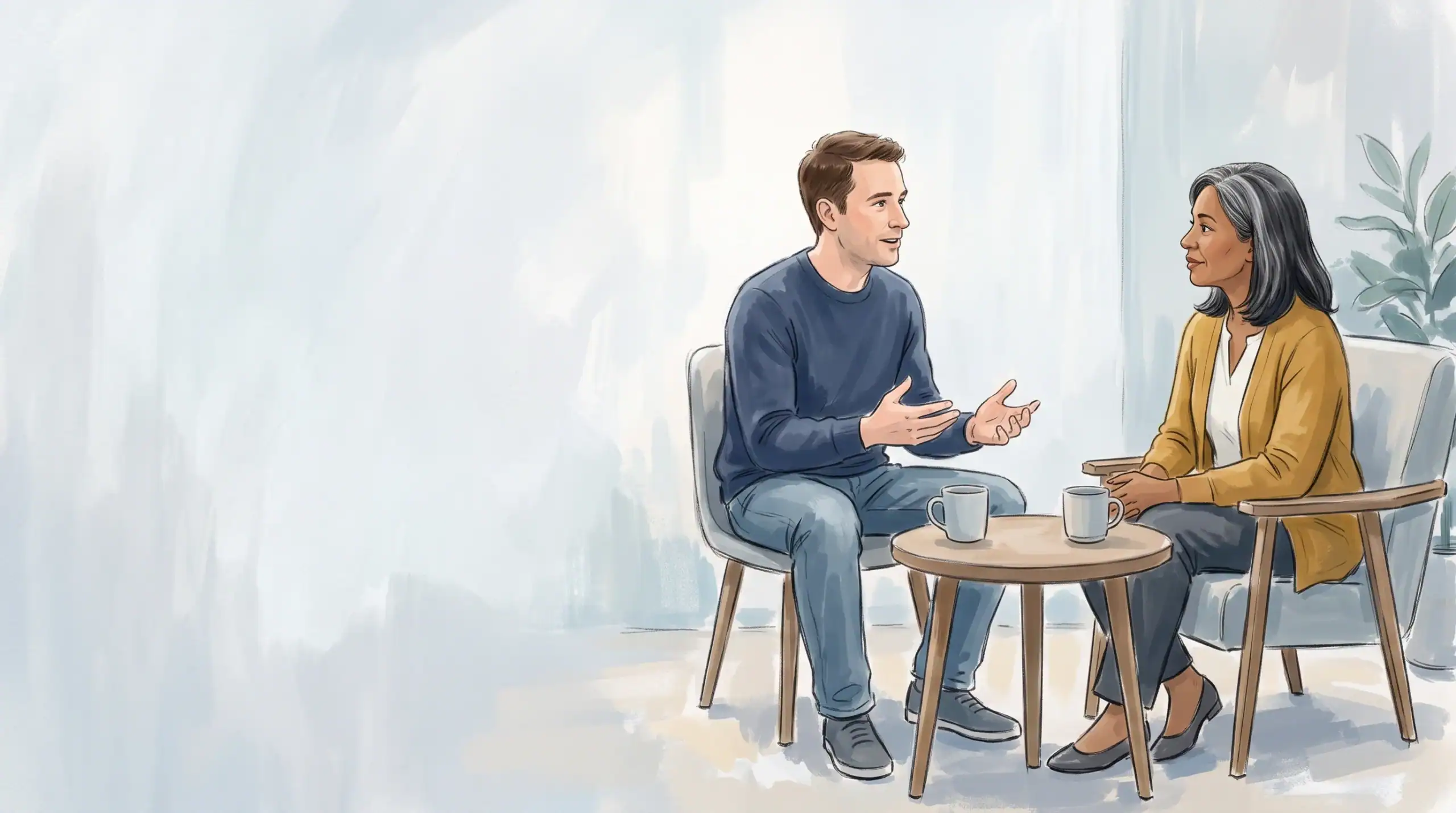
Depression is treatable, and there is more than one path to feeling better. Behavioral activation helps people act before motivation returns, cognitive behavioral therapy (CBT) loosens the thought patterns that fuel withdrawal, and medication can help when depression is more severe. This guide explains how each approach works, how treatment is matched to severity and preference, and coping strategies that support care between appointments.
If you are in crisis or having thoughts of suicide, call 911, the nearest ER, or call or text 988.
Key Takeaways
- Depression often creates a withdrawal cycle: low mood leads to doing less, and doing less deepens low mood.
- Behavioral activation and CBT are well-studied psychotherapies for depression, and motivation often builds after taking action.
- Antidepressants are a common option for moderate to severe depression and are often combined with therapy.
- Treatment is matched to severity, history, and personal preference, and progress is reviewed regularly.
- If the first approach does not help enough, adjusting the plan is a normal part of care.
How the Withdrawal Cycle Keeps Depression Going
Depression drains energy and interest, so people naturally pull back from work, friends, hobbies, and exercise. In the short term, withdrawing can feel like relief. Over time it removes sources of pleasure, accomplishment, and connection, which can deepen low mood and make the next step feel even harder. Many depression treatments are designed to interrupt this cycle.
Behavioral Activation: Small Actions That Can Lift Mood
Behavioral activation (BA) is a structured therapy that focuses on what you do rather than waiting to feel motivated first. With a clinician, you identify activities that matter to you, notice how avoidance affects mood, and gradually rebuild a routine that includes enjoyment, accomplishment, and connection.

Activity Scheduling: Plan the Week Around Small Wins
Activity scheduling means planning specific activities at specific times, rather than waiting to see how you feel. A useful plan mixes three kinds of activities:
- Pleasure: things you enjoy or used to enjoy, such as music, a walk, or a favorite meal.
- Mastery: tasks that bring a sense of accomplishment, such as paying a bill or tidying one shelf.
- Connection: brief contact with people, such as a text, a call, or coffee with a friend.

Graded Tasks: Rebuild Confidence in Small Steps
Large tasks can feel impossible during depression. Graded task assignment breaks them into small, specific steps. Instead of tackling the whole house, you might start by tidying one room for twenty minutes. Each completed step builds evidence that action is possible, and steps grow as energy returns.
Track Mood and Activity Patterns
Many people keep a simple log that pairs daily activities with a mood rating. Over a week or two, patterns usually emerge, such as which activities lift mood a little and which times of day are hardest. That information guides what to schedule next and helps you and your clinician see progress that is easy to miss day to day.
Behavioral Activation or CBT: Which Fits?
Both behavioral activation and CBT have research support for depression, and studies comparing them often find similar results for many people. The choice often comes down to fit:
- BA may suit people who feel stuck, withdrawn, or low on energy and prefer a practical, action-focused approach.
- CBT may suit people who want to work directly on harsh self-talk, hopeless predictions, and core beliefs, alongside behavior change.
Many clinicians blend the two. For a broader comparison of therapy types, see CBT vs. EMDR vs. ACT.
How CBT Works With Depressive Thinking
CBT looks at how thoughts, feelings, and behaviors affect each other. Depression often brings automatic thoughts such as “I always mess things up” or “nothing will change.” In CBT, you learn to notice these thoughts, examine the evidence for and against them, and practice more balanced alternatives.
Over time, CBT can also address deeper core beliefs, such as “I am not good enough,” by testing them against real experiences. Behavioral experiments, where you try something and observe what actually happens, are a common tool. Skills learned in CBT are meant to be used after therapy ends, which is one reason it is often part of relapse prevention.
Other Therapies With Research Support
- Interpersonal therapy (IPT): focuses on relationships, role changes, grief, and conflict.
- Acceptance and commitment therapy (ACT): builds willingness to experience hard feelings while acting on personal values.
- Mindfulness-based cognitive therapy: combines mindfulness practice with CBT skills and is often used to help prevent relapse.
Depression Treatment Without Medicine: What the Evidence Supports
Several psychotherapies, including behavioral activation, CBT, interpersonal therapy, and mindfulness-based cognitive therapy, have research support for depression and are often a first option for mild to moderate symptoms. Regular physical activity, steady sleep routines, and social connection can also support recovery. For moderate to severe depression, a clinician may recommend adding medication, and the decision is made together.
Medication for Depression
Antidepressants such as SSRIs, SNRIs, bupropion, and mirtazapine are common options. Medication can help stabilize mood when depression is more severe, when it has not improved enough with therapy, or when a person has responded well to medication before. Choices depend on symptoms, side effects, other health conditions, pregnancy plans, and past response.
Antidepressants usually take several weeks to reach their full effect, and sleep, appetite, or energy may improve before mood does. Early side effects often ease, but any concern is worth raising with your prescriber rather than stopping on your own. Before starting, a prescriber also asks about past periods of unusually high mood, because antidepressants alone can be risky in bipolar disorder; see bipolar II vs. unipolar depression. For more on medication classes, see understanding antidepressants and anti-anxiety medications.
Combining Therapy and Medication
For moderate to severe depression, combining psychotherapy and medication is often recommended. Medication may ease symptoms enough to make therapy work possible, while therapy builds skills that can last after medication ends. Coordinated care, where the therapist and prescriber share updates with your permission, helps the plan stay consistent.
Matching Treatment to Severity and Preference
- Mild depression: psychotherapy such as BA or CBT, guided self-help, activity, and sleep routines are common starting points.
- Moderate depression: psychotherapy, medication, or both, depending on history and preference.
- Severe depression: combined treatment is commonly recommended, with closer monitoring and attention to safety.

Questionnaires such as the PHQ-9 help measure severity at the start and track change over time. Your preferences, past experiences, and practical factors all matter in choosing a plan.
When Nothing Helps: Treatment-Resistant Depression and Next Steps
Many people need more than one try to find the right fit. If progress is limited, a provider may adjust a dose, switch or add a medication, add therapy, change the therapy approach, or recheck the diagnosis. When several approaches have not helped, a psychiatrist may discuss additional evidence-based options. Limited response is a reason to revisit the plan, not a reason to give up.
Symptoms of Severe Depression: When to Seek Urgent Help
Seek help right away if depression comes with thoughts of death or suicide, a plan or intent to harm yourself, being unable to eat, drink, or care for yourself, hearing or seeing things others do not, or a sudden, sharp worsening of symptoms. In those situations, call 911, the nearest ER, or call or text 988. Telling someone you trust and not staying alone can also help while you get support.
Coping Strategies That Support Treatment
- Keep a steady sleep schedule: regular wake times and a wind-down routine support mood and energy.
- Move a little each day: a short walk or gentle stretching counts, and you can build up gradually.
- Stay connected: brief, regular contact with supportive people can ease isolation.
- Limit alcohol and other substances: they can worsen mood and sleep and interact with medication.
- Be specific and kind with yourself: set small, concrete goals and notice what you did, not only what you did not do.
These strategies support professional care; they do not replace it.
Staying Well After Depression Lifts
Depression can return, so many people build a staying-well plan with their clinician. It usually lists early warning signs, what helped before, routines to protect, and when to reach out. People taking an antidepressant are often advised to continue it for a period after feeling better, and any change is planned with the prescriber.
Finding Depression Treatment in Maryland
Consider reaching out if low mood, loss of interest, or exhaustion has lasted two weeks or more, or if it is affecting work, school, or relationships. Blue Sails offers CBT and ACT therapy for depression and medication management for depression and mood disorders. The anxiety and depression guide explains how care works and how to start, or call (410) 231-0488. For background on the condition itself, see understanding clinical depression. If thoughts of death or suicide come up, call 911, the nearest ER, or call or text 988.
Frequently Asked Questions
Can depression be treated without medication?
Yes, for many people. Psychotherapy such as behavioral activation, CBT, or interpersonal therapy is a common first option, especially for mild to moderate depression. Medication is more often recommended when depression is moderate to severe, has not improved with therapy, or has responded to medication before. The choice is made together with a clinician.
What is behavioral activation?
Behavioral activation is a structured therapy that helps people gradually re-engage with meaningful and enjoyable activities, even before motivation returns. It uses activity scheduling, small graded steps, and mood tracking to break the cycle of withdrawal and low mood.
How long does depression treatment take?
It varies. Structured therapies are usually delivered over a planned series of sessions, and antidepressants usually take several weeks to reach their full effect. Providers review progress regularly and adjust the plan if improvement is limited.
What happens if the first treatment does not help?
Not responding to the first treatment is common and does not mean depression cannot improve. Options include adjusting the dose, switching medicines, adding therapy or medication, or trying a different therapy approach. A psychiatric evaluation can also recheck the diagnosis, including screening for bipolar disorder.
Should I stop my antidepressant once I feel better?
Talk with your prescriber first. Feeling better usually means the treatment is working, and many people are advised to continue for a period after symptoms improve to lower the chance of relapse. Stopping suddenly can cause discontinuation symptoms, so changes are usually planned and gradual.
Is there a miracle drug for depression?
No. No single medicine works for everyone, and claims of a quick cure deserve caution. Several medication classes and therapies are effective for many people, and finding the right fit can take adjustments. A prescriber can explain the options that suit your symptoms and health history.
What happens if depression is left untreated for years?
Untreated depression can last longer, return more often, and affect sleep, physical health, work, and relationships. It is never too late to start treatment, and many people improve even after living with depression for a long time.
How do I get out of a depressive episode right now?
There is usually no instant fix, but small steps can help: get outside or move for a few minutes, eat something, reach out to one person, and pick one small task to finish. Reaching out to a clinician starts longer-term care. If you are thinking about suicide or feel unsafe, call 911, the nearest ER, or call or text 988.