
Autism services · Social skills and school readiness
Autism social skills groups and kindergarten readiness in Maryland
Starting kindergarten asks a lot of a young child: joining a group, waiting for a turn, asking for help and coping when plans change. For autistic children, these skills can be practiced with coaching alongside peers before the first day of school. This guide explains what kindergarten readiness looks like, how social skills practice works, how Maryland’s Child Find and IEP process fits in and how to ask about next steps.
Prefer to talk? Call (410) 231-0488

Key takeaways
-
Readiness is more than ABCs
Communication, play with peers, coping with big feelings and independence with routines all matter for the first weeks of kindergarten.
-
Skills can be practiced
Small, coached peer activities give children low-pressure chances to try greetings, turn-taking and joining a game.
-
Frustration is communication
Calm adult support, called co-regulation, helps children settle before they can calm themselves on their own.
-
Schools decide eligibility
Child Find and the IEP team make educational decisions, which are separate from a medical diagnosis.
-
You can ask now
You don’t need to wait for a kindergarten start date to raise questions with your child’s doctor or our intake team.
Social skills and school readiness are part of our autism services. Peer practice takes place inside the early-intervention autism program for children ages 2 to 6. Program options and locations vary, so ask our intake team what is currently available for your child. Families deciding how much of a toddler's week should happen in a clinic versus at home can read our comparison of center-based and in-home ABA settings for toddlers.
The readiness skills autistic kids need for kindergarten

Kindergarten readiness is broader than letters and numbers. The Head Start Early Learning Outcomes Framework describes five areas: approaches to learning, social and emotional development, language and literacy, cognition, and perceptual, motor and physical development. For many autistic children, four practical areas come up again and again:
- Functional communication: asking for help or a break with words, signs, pictures or an AAC device.
- Social play: joining peers, taking turns and sharing materials.
- Emotional regulation: noticing big feelings and using a calming strategy with support.
- Independence: managing belongings, washing hands, toileting and moving between activities.
In the early-intervention autism program, children practice these skills inside play and daily routines such as circle time, snack, cleanup and transitions, rather than as isolated drills. ABA therapy in the program is planned with BCBA oversight, and goals are written as specific, observable skills that the team reviews with you. Many families and educators find that these everyday skills shape the first weeks of school as much as early academics do. For a closer look at each skill, see our guide to kindergarten readiness skills for children with autism.
How social skills groups work
A social skills group works like low-pressure practice time. A child tries joining a game, waits through a turn and recovers from a moment of frustration, with an adult nearby to coach rather than correct. Groups are usually small, and children are often matched by age and skill level. Families who want to practice at home can read about ABA parent coaching and IEP advocacy support.
Whether you are looking at our program or comparing other options in Maryland, these questions can help:
- Who leads the group, and what are their credentials?
- How are children matched, and how many children and adults are in each group?
- Which skills are targeted, and how is progress measured and shared with you?
- How are communication differences, including AAC, supported?
- Can parents observe, or get coaching to practice the same skills at home?
- What does it cost, and does your insurance plan cover it?
Blue Sails has offices in Bethesda and Lusby. If you live in a nearby county, such as Calvert County or Anne Arundel County, ask intake which program options are closest to you.
Friendship skills taught in social skills groups
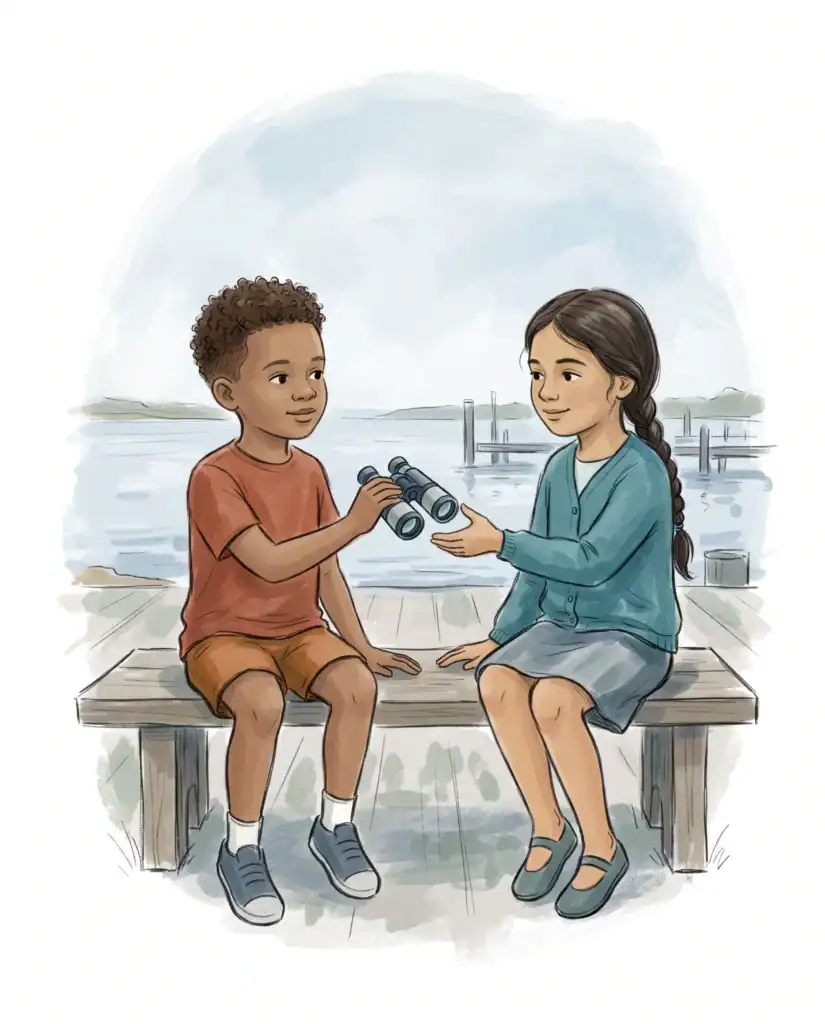
Friendship runs on skills, and skills can be practiced. Common targets in social skills practice include:
- Greetings and invitations: saying hello to a peer and responding when someone asks you to play.
- Back-and-forth exchanges: taking turns, asking a question, commenting and staying on a shared topic.
- Getting and giving help: getting a peer’s attention, asking for help and offering it.
- Cooperative play: joining a game, suggesting an idea, sharing materials and inviting others in.
- Perspective-taking: noticing what a partner wants or feels and showing interest.
Children who use AAC or are still building speech can take part too. Pediatric speech-language therapy can support the communication side of these exchanges. A useful plan looks for real back-and-forth with peers, not just how often a child is near other children.
Co-regulation support when group frustration hits

A young child juggling noise, social demands and surprises can’t always calm down on cue. Co-regulation means a trusted adult helps the child notice, understand and settle big feelings through calm interaction, before the child can do it alone. In coached peer practice, adults typically:
- Watch for each child’s early cues: some go quiet, some get louder, some move away.
- Offer calm reassurance, gentle prompts and redirection without demanding an explanation.
- Offer a lower-stimulation option, such as movement, a comfort item or a quiet corner.
- Treat frustration as communication, then adjust based on what helps that child.
Sensory needs can play a part, and pediatric occupational and sensory therapy is one support to ask about. If anxiety, sleep or attention concerns are part of the picture, talk with your child’s doctor about next steps. If your child or anyone else is in danger, contact 911, the nearest ER, or call or text 988.
From Child Find to a Maryland IEP classroom
Skills practiced with peers are most useful when they carry into the classroom. From age three, your local public school system handles preschool special education evaluations through Child Find, even if your child does not attend that school, and you can start the process yourself.
- Referral: you can make a written referral to your local school system if you suspect a disability affects learning.
- Evaluation: under Maryland rules, the initial evaluation must be completed within 60 days of your written consent for assessments.
- IEP: if your child is found eligible, the team must meet to develop the IEP within 30 days. The team decides services and placement.
Children under three are served through the Maryland Infants and Toddlers Program. The local program generally holds a transition planning meeting at least 90 days before your child’s third birthday, and Maryland’s Extended IFSP Option lets eligible families choose to continue early intervention services instead of moving to preschool special education.
A school’s educational autism classification is not the same as a medical diagnosis. The school team decides IEP eligibility under education rules, while insurers may have their own requirements for covering ABA. Our autism evaluations page explains the medical side, and our insurance and billing page can help you check benefits.
With your permission, Blue Sails clinicians can share relevant information with your child’s school team or help you prepare questions for an IEP meeting. School teams make their own decisions about eligibility, supports and placement. Our guides to support for toddlers and preschoolers and autism and early intervention cover earlier steps.
Frequently asked questions
Ask intake about your child’s needs, coverage and current availability.
How much do autism social skills groups cost in Maryland?
Costs vary widely by provider, group length and format. Ask each program for its current rates in writing, and check whether your insurance plan covers the service.
Does insurance or Maryland Medicaid cover social skills groups?
Coverage depends on your plan and how the service is provided. Ask your plan, or Maryland Medicaid, about autism benefits, prior authorization and network status before you enroll. See insurance and billing.
How soon can my child get an autism evaluation?
Wait times vary. Blue Sails offers autism evaluations. Call our intake team at (410) 231-0488 to ask about current openings, insurance requirements and any records to bring.
What should I ask about group size and staffing?
Ask how many children are in each group, how many adults are present, who supervises and how activities are adjusted for each child. The right fit depends on your child’s needs.
Can parents observe sessions before enrolling?
Policies vary by program. Ask whether you can observe a session, tour or meet the team first, and ask for the policy in writing.
Ask about social skills and school readiness
Share what you’re noticing about your child’s play, communication and routines, and ask about the early-intervention autism program, evaluations and coverage. Blue Sails has offices in Bethesda and Lusby, with telehealth across Maryland.
If you or your child are in crisis, contact 911, the nearest ER, or call or text 988.