
Adults · Pregnancy, postpartum and the first year with a baby
Women’s, Maternal & Perinatal Mental Health Care (PMADs & Postpartum) in Maryland
Perinatal mental health care in Maryland supports people during pregnancy, after birth and through the first year with a baby. This page explains perinatal mood and anxiety disorders (PMADs), signs that it may be time to reach out, how therapy and psychiatry can help, and how to start care at Blue Sails.
Prefer to talk? Call (410) 231-0488
Key takeaways
-
PMADs are common and treatable
Depression, anxiety and related conditions during pregnancy or after birth are health conditions, not a personal failing. Help is available.
-
Baby blues usually pass
Mild mood changes in the first two weeks after birth are common. Symptoms that are severe or last longer deserve a closer look.
-
Therapy is often a first step
Approaches such as cognitive behavioral therapy (CBT) and interpersonal therapy (IPT) are used for perinatal depression and anxiety.
-
Psychiatry when it fits
A psychiatric provider can talk with you about medication during pregnancy or breastfeeding, when clinically appropriate. The decision is made with you.
What perinatal mental health means
“Perinatal” usually describes the time from pregnancy through the first year after birth. Sleep, hormones, relationships, identity and daily routines can all change at once, and emotional ups and downs are expected. When distress becomes intense or lasting, providers may call it a perinatal mood and anxiety disorder, or PMAD.
PMADs can include depression, anxiety, obsessive-compulsive symptoms, post-traumatic stress and bipolar disorder that begin or return during this time. The American College of Obstetricians and Gynecologists (ACOG) describes perinatal mental health conditions as among the most common complications of pregnancy and recommends screening during and after pregnancy.
For a deeper look at each condition, screening and medication safety, read our guide to perinatal mental health in Maryland.
Baby blues or something more?
Many new parents have mild, short-lived mood changes in the first two weeks after birth, sometimes called the baby blues. According to the National Institute of Mental Health, mood changes and feelings of anxiety or unhappiness that are severe or last longer than two weeks may be signs of postpartum depression.
It may be time to talk with a provider if you notice:
- Sadness, emptiness or hopelessness most of the day
- Worry or panic that does not settle, or racing thoughts
- Unwanted, frightening thoughts about harm coming to your baby
- Irritability, guilt or feeling like you are failing
- Trouble sleeping even when your baby sleeps, or sleeping much more than usual
- Losing interest in things you used to enjoy
- Feeling disconnected from your baby, your partner or yourself
Symptoms can begin during pregnancy, soon after birth or later in the first year. You do not need to be sure what is going on before you reach out.
Difficulty bonding with baby
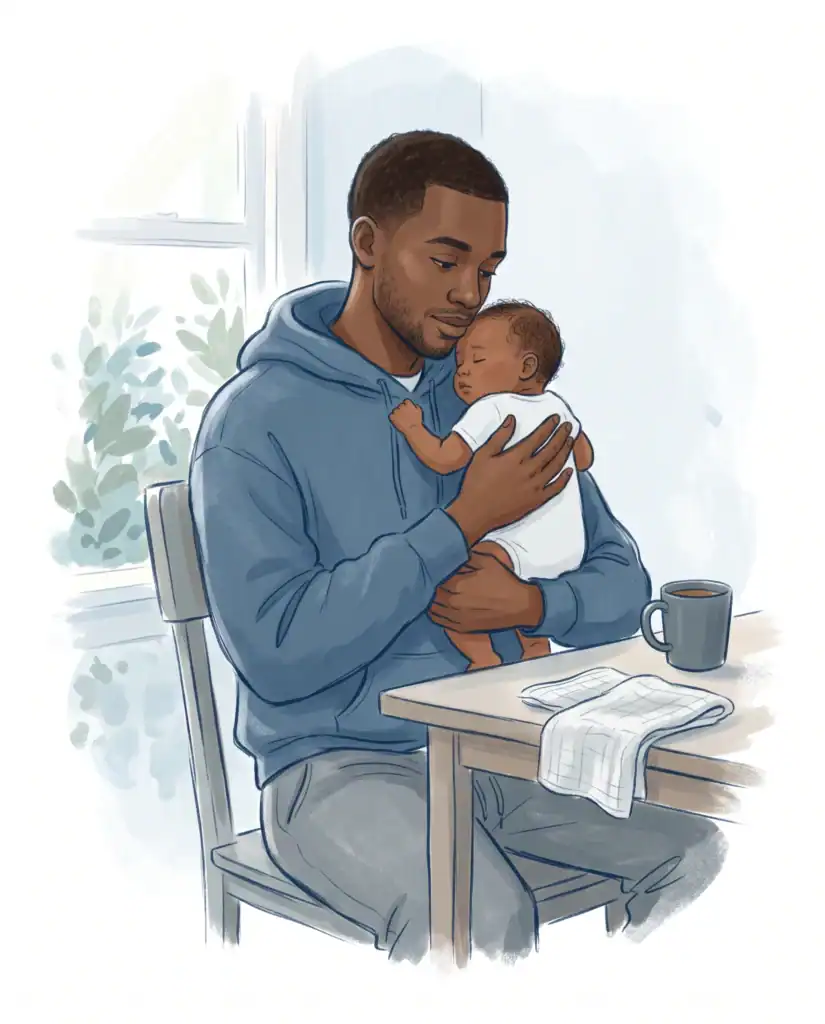
Some parents expect an instant rush of love and instead feel numb, distant or unsure. Trouble bonding with a baby is listed by the NIMH among possible signs of perinatal depression. It does not mean you are a bad parent, and it is worth talking about.
In counseling, your provider can help you sort out what is getting in the way, such as exhaustion, anxiety, a hard birth or low mood, and work with you on small, realistic steps. Partners and non-birthing parents can struggle too, and they are welcome to reach out for their own care.
Who may be more likely to have a PMAD
A PMAD can happen to anyone, including people with no past mental health concerns. The NIMH notes that life stress, the physical and emotional demands of a new baby, and hormonal changes can all play a part, and that a personal or family history of depression or bipolar disorder, or depression in a previous pregnancy, raises the risk.
Other experiences that can add strain include a difficult or frightening birth, a baby’s stay in intensive care, pregnancy loss, fertility challenges, limited support at home and major life changes such as a move or deployment. If any of these apply to you, it is reasonable to plan for extra support before and after your baby arrives.
Birth trauma, pregnancy loss and grief
A birth that felt frightening or out of control can leave lasting reactions, such as nightmares, flashbacks, avoiding medical visits or feeling on edge. Grief after miscarriage, stillbirth or infant loss can also be deep and long-lasting, and it deserves care in its own right.
Blue Sails offers trauma-focused therapy for adults. Our page on trauma, PTSD and EMDR therapy explains how trauma can affect the mind and body and what treatment can look like.
Therapy for PMADs at Blue Sails
Counseling is often a first step for perinatal depression and anxiety. The NIMH lists cognitive behavioral therapy (CBT) and interpersonal therapy (IPT) among evidence-based therapies for perinatal depression. ACOG guidance describes psychotherapy as a good fit for many people with mild to moderate symptoms.
Your provider may help you:
- Notice and rework thoughts that keep worry or guilt going
- Adjust to changes in roles, relationships and identity
- Plan around sleep, feeding and support at home
- Process a difficult birth or a loss
- Decide what help to ask for from a partner, family or friends
Read about individual psychotherapy and CBT and ACT for anxiety and depression. If stress is affecting your relationship, our page on therapy for couples and families explains those options.
Psychiatry, pregnancy and breastfeeding
A psychiatric provider can help when symptoms are severe, keep coming back or are hard to sort out. Psychiatry is also available at Blue Sails. Medication is considered when clinically appropriate, and the decision is made with you.
If you are pregnant, planning a pregnancy or breastfeeding, your provider will talk with you about the possible benefits and risks of medication and of untreated symptoms. The NIMH advises talking to a health care provider before starting or stopping any medication, so please do not stop a medication on your own.
If you want your OB, midwife or primary care clinician kept in the loop, ask your provider about sharing information with your written permission. See psychiatric evaluations and psychiatric medication management for how visits work.
Substance use during pregnancy and after birth
Some people use alcohol or other substances to cope with stress, sleep loss or low mood, and many worry about being judged. You can talk about it openly with your provider.
Blue Sails offers substance use care, including care when substance use and a mental health concern happen together. Our guide to substance use disorder and dual diagnosis explains how combined care works.
In person or by telehealth, with your baby
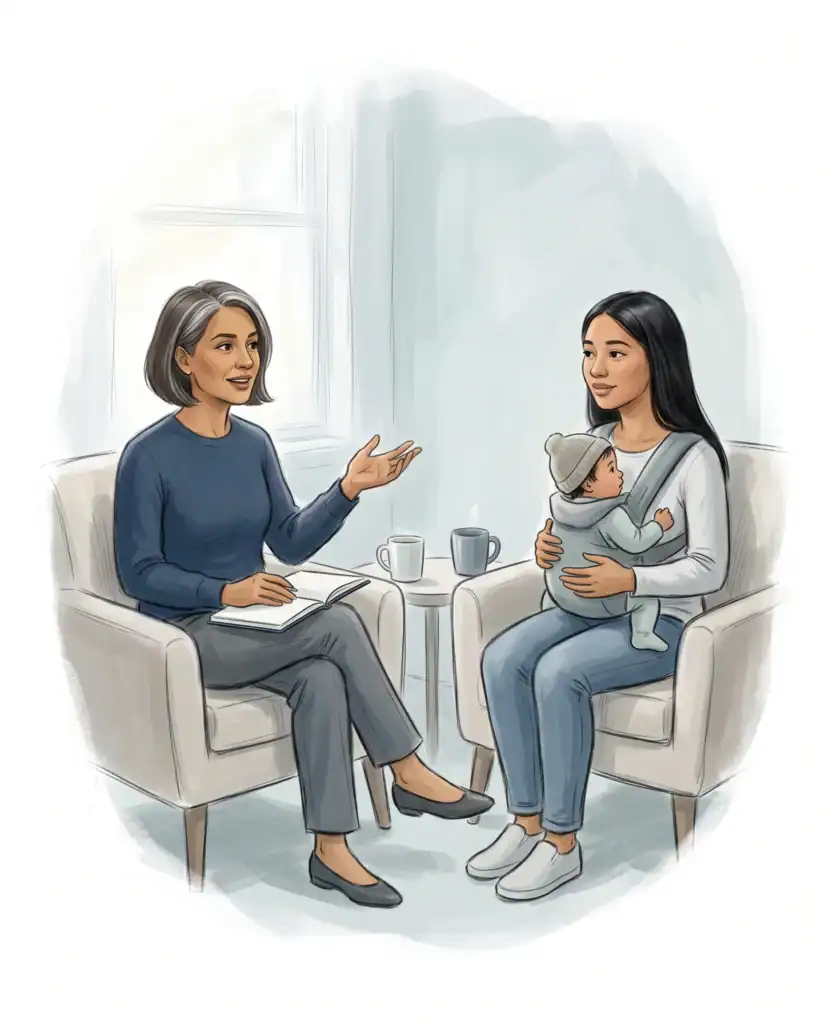
Therapy is available in Bethesda, in Lusby or by telehealth anywhere in Maryland, and psychiatry is also available. Telehealth can make it easier to keep appointments with a newborn at home. You need to be physically in Maryland during each telehealth visit, and a quiet, private space helps.
Babies need feeding and soothing on their own schedule. Talk with your provider about what to do if your baby needs you during a session, and ask our team what works if you would like to bring your baby to an in-person visit. Our page on telehealth counseling in Maryland explains how to set up for sessions.
Where Maryland parents can find help right now

If you are in crisis, call 911, the nearest ER, or call or text 988.
Sudden confusion, seeing or hearing things others do not, or thoughts of harming yourself or your baby need emergency care right away. The NIMH describes postpartum psychosis as a psychiatric emergency.
- The National Maternal Mental Health Hotline is free, confidential and available 24/7 in English and Spanish: call or text 1-833-TLC-MAMA (1-833-852-6262). Partners and family members can contact it too.
- Postpartum Support International offers support groups and help finding care.
- The Maryland Department of Health explains how 988 works in Maryland.
- Our crisis resources page lists more options.
Blue Sails is not an emergency service. Outpatient appointments are for scheduled care.
Starting care at Blue Sails
- Call (410) 231-0488 or use our client intake form.
- Tell us whether you are pregnant or postpartum, whether you are interested in counseling, psychiatry or both, and whether you prefer in person or telehealth. Keep detailed history for your first appointment, not the form.
- Blue Sails accepts insurance, including TRICARE, and offers self-pay and sliding-scale options for those who qualify. Coverage varies by plan and service, so see insurance and costs or ask our team to check your benefits before care begins.
You can also return to our page on therapy and psychiatry for adults.
Frequently asked questions
Ask our team about perinatal counseling and psychiatry.
Can partners and non-birthing parents get support too?
Yes. Partners, adoptive parents and other non-birthing parents can also have depression or anxiety after a baby arrives. They can start their own care at Blue Sails, and couples or family sessions are another option.
Do I need a diagnosis or referral to start?
You do not need to know your diagnosis before you reach out. Your provider will talk with you about what you are experiencing and which care fits. Some insurance plans have their own referral rules, so our team can help check your benefits.
Can I take medication while pregnant or breastfeeding?
It depends on your symptoms, history and preferences. A psychiatric provider can talk with you about the possible benefits and risks of medication and of untreated symptoms, when clinically appropriate. Please talk with a provider before starting or stopping any medication.
Can I have telehealth sessions with my baby at home?
Telehealth is available anywhere in Maryland, and you need to be physically in Maryland during each visit. Talk with your provider about what to do if your baby needs you during a session.
Do you take insurance?
Blue Sails accepts insurance, including TRICARE, and offers self-pay and sliding-scale options for those who qualify. Coverage varies by plan and service, so our team can help check your benefits before care begins.
Talk with us about perinatal mental health care
Tell us what pregnancy or life with a new baby has been like. Therapy is available in Bethesda, in Lusby or by telehealth, and psychiatry is also available.
If you are in crisis, call 911, the nearest ER, or call or text 988.